

George Shaw 1875-1953
Married 1896, age 21 to Eveline Hobbs age 20
Birth: 15/03/1875 (written note from Dad)
Death Registration: 30/06/1953
Registration details: 1953/B/44046 https://www.familyhistory.bdm.qld.gov.au/
One of ten children to William Shaw and Mary (McCurry) Shaw.
Founder of George Shaw & Co. Firearms and Fishing Tackle store in 1908. (Dad’s notes & AI verified)
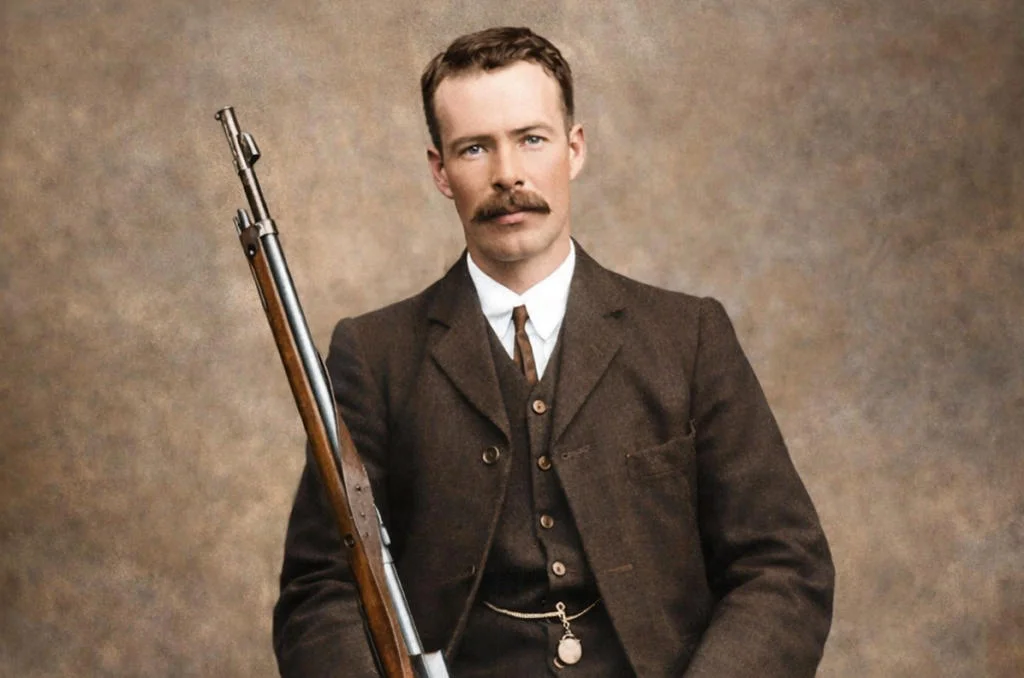
Champion shot with the Lee Metford long barrel .303 rifle.
Sergeant at age 24–25 was entirely possible. In the colonial military forces of Queensland, promotion could be much faster than in a large regular army.
Sergeant is listed on the Queen’s / Kings Prize Honours Board 1899 entry, now at QRA Museum)
In 1899:
Queensland still had its own colonial military forces, before Federation in 1901.
Many units were militia or volunteer units.
A keen, competent young man from a respectable business family could rise relatively quickly.
Competitive rifle shooting was highly valued, and good marksmen often gained prominence within their units.
A Sergeant at 24 or 25 would not have been unusual at all, particularly if he had joined in his late teens.
One reference listed George as a Lieutenant.
In the colonial Queensland forces and the early Australian military, a common pathway was:
Private → Corporal → Sergeant → Colour Sergeant (sometimes) → Lieutenant (commissioned officer)
George was an active rifleman and respected within his unit, so a commission as Lieutenant in his late 20s or 30s would be entirely plausible.
George appears to have been deeply embedded in Queensland’s shooting community. That would have made him well known among rifle clubs, military volunteers, and sporting organisations.
In one photography, reference to (Q) could possibly mean Queensland, QRA classification, a newspaper abbreviation, or a competition status.
Sergeant versus Lieutenant
The difference is quite substantial.
Sergeant
- Senior non-commissioned officer (NCO).
- Responsible for training, discipline, drill, and supervising soldiers.
- Earned promotion through the ranks.
- Usually considered the backbone of a unit.
Lieutenant
- Commissioned officer.
- Holds the King’s or Queen’s commission.
- Commands platoons or troop-sized groups.
- Socially and administratively a different class of appointment from NCOs.
Trove Articles
THE COLONIAL BISLEY
TEAMS.
EXCELLENT PRACTICE.
LONDON, Thursday.
The Australians and New Zealand, rifle
teams will take part in the contest for the
Mackinnon Cup, to be competed for at the
Bisley rifle meeting on Friday next.
In practice, under the Kolapore Cup con
ditions, namely, seven shots at 200, 500,
and 600. yards, the Australians have done
excellently, and have the best average
among the colonial teams who are to take
part.
This article likely links back to the Mounted Rifleman Portrait, George Shaw – Queensland, 1907 photo as seen in the gallery.
The rifle ranges varied in locations. The early shooting appears to mainly be in Toowong. We get a better idea of the extent of shooting and the competitive nature.
https://trove.nla.gov.au/newspaper/article/289802349
RIFLE TEAM FOR BISLEY.
QUEENSLAND REPRESENTA
TIVES.
MESSRS. GEO. SHAW AND J.
LANHAM.
The final series of shoots to decide Who
should be the two Queensland representa-
tives in the Commonwealth riffle team to
visit England this year and take part in
the Bisley meeting was completed on the
Toowong Riffle Range yestarday. In the
first instance preliminary competitions
were held at Brisbane, Toowoomba, and
Charters Towers, and the probables were
narrowed down to eight — four from Bris-
bane, two from the Downs, and two from
North Queensland. These preliminary
competitions were beld over 200yds.,
500yds., and 600yds. The final series con-
sisted of four shoots, each comprising
seven shots at 200, 500, 600, 800, and 900
yards, the 5in. invincible ball being used at
200yds. Thu first shoot took place on
Monday, and the second on Tuesday after-
noon. George Shaw topped each, and had
an aggregate of 320 out of a posible 350
after the two shoots, while Motton had
300, Lanham 305, Swales 299, Wassell 298,
Atwell 294, Bradley 292, and Northam 276.
The other two shoots took place yester-
day at the Toowong range under excellent
conditions, as the wind Was not trouble-
some. In the morning Grorge Shaw again
(incurred) top place with 164, bringing his
aggregate to 484. It was then evident
that, barring accident, he could not miss
being one of the two representatives, and
interest centred on who should be his
colleague.
…
(various excitement about close scores/duels
with Kolapore Cup conditions – G. Shaw a certainty)
…
The following are the details of the aggregate, showing the scores in each shoot:-
1st 2nd
Geo. Shaw (Brishanc) 1st 161, 2nd 159, 3rd 164, 4th 161 Ttl 645
J. Lanham (D. Downs) ttl 629
E. Wassell (A.N.A) ttl 621
H. Motton (C. Towers) 160 619
…
The following are the details of the third and fourth shoots yesterday:-
MORNING SHOOT
…
AFTERNOON SHOOT
…
Messrs. Shaw and Lanham will thus be
the Queensland representatives to go to
Bisley, and will leave for England in
May. It will be Shaw’s second trip home,
as he was a member of the first Aus-
tralian team in 1902, on which occasion
he won the colonial aggregate in the
King’s.
…
MR. G. SHAW
Mr. George Shaw is perhaps the best-known rifle shot in Queens-
land. He has won serveral King’s Prizes in Queens-
land – at Toowing, Toowoomba,
and Rockhampton. FOr years past he has
been regularly selected as a member of
the Commonwealth Rifle Team sent from
Queensaland, and is a (shot) of most varied
experience. Besides being a regular com-
petitor, he is an indefatigable worker for
rifle shooting, and is a member of the
Queensland Rife Association Council and
the council of the Moreton District Rifle
Club’s Association.
For some information on the origins of the cup, see: https://www.soldiersofthequeen.com/williammurraysmith
https://nraa.com.au/sport-history/early-australian-team-selection-and-the-bisley-tests/
https://trove.nla.gov.au/newspaper/article/126258563https://trove.nla.gov.au/newspaper/article/126258563
20th October 1909 – Australia’s Bisley – N.S.W’s Rifle Association’s Jubilee Meeting – How the King’s Was Won.
https://trove.nla.gov.au/newspaper/article/165736740
1913
https://trove.nla.gov.au/newspaper/article/201125104
https://trove.nla.gov.au/newspaper/article/213172108
FISHING
GEORGE SHAW GETS A 431b. JEW
Fishing Good at Bribie and Wellington Point George Shaw, of Geo. Shaw & Co., Albert Street, one of Queensland’s
oldest and most capable anglers, takes first prize among last week’s angling catches. Fishing at his favourite spot, Bribie, he landed a 431bs. jew and just to add variety creeled some squire up to 51bs.
https://trove.nla.gov.au/newspaper/article/71268421
SHAW’S SPOUTS DEPOT.
George Shaw and Co., of Sports Depot,
Edward street, are well provided in the
requirements of fishermen, and rifle shots.
Although the shop is a small one, the
firm curry a big stock, and a glance at
their gun window shows 75 different fire-
arms displayed. In the fishing tackle win-
dow, 45 different rods and 14. different
casting reels arc displayed. The firm is
noted for its gut lines , they have big
sales for these, and fresh shipments are
constantly arriving.
The Kolapore Cup 1902
his silver bowl trophy was given to all the team members. For example, view William Todd’s award/trophy at:
https://collection.australiansportsmuseum.org.au/objects/17806/kolapore-cup-awarded-to-shooter-william-todd-1902
HOWEVER – notes received from NRA UK, email 9th July 2025
The bowl is genuine silver, at least 92.5%, and was made in 1907. It is not a Kolapore trophy. People would make souvenirs. The letter “h” means 1907, not 1902 when the competition was won.
The words Sit Perpetuum indicate a motto for enduring existence and co-operation (seems appropriate for Australia and England).
Here is the email:
Dear Laurie,
Your email of 25 April 2025 has belatedly arrived with us at the Museum of the NRA…
… The pictures of the silver bowl engraved with the legend “Kolapore Cup 1902” are not of the Kolapore Trophy itself, but of souvenir silver bowls bearing the NRA (UK) symbol of the bowman and the rifleman. The bowl also appear to bear a silver mark indicating Elkington & Co but the year letter “h” would be 1907: similar bowls probably of a later date were of a base metal. It is always possible that although Shaw shot in 1902 the bowl was purchased later and engraved retrospectively in 1907.
It has puzzled us because the lists of those shooting for Australia in that match in 1902 contain the name of a Private G Shaw, but in the Grand Aggregate for that year a Lt G Shaw was 18th. In 1907 there is mention of a Lt G Shaw in the Grand Aggregate at 26th. In 1907 he is listed as Lt G Shaw in the Australian Mackinnon team. We suspect that there is a simple error in the records of the time.
…
Curator, Museum of the NRA
Information from NRA UK Museum:
NRA UK museum has advised me this was not a Kolapore trophy, that the “h” symbol from Elkington is 1907. Apparently, people would have souvenirs made, so this was made approx. five years after the 1902 event. I researched this as my great grandfather G Shaw was on the team and had the same “trophy” with his own name. I believe William Todd was the top shooter. The inscription under the bowl is indeed “FI KINGTON” followed by some further marks on our “trophy” that may be poorly hand made to indicate something that we cannot read correctly. I don’t know why FI followed by a space before KINTON is engraved. Perhaps an engraving mistake?
The Four Marks are:
(1) E&C[O]L[D] where [O] and [D] are uppercase superscript, contained in three oval shapes. (All references I have seen are two ovals without the Ld for the third oval shape.)
(2) An anchor symbol is the hallmark of the Birmingham Assay Office, indicating where the silver was tested and marked. (AI reference)
(3) Lion Passant: This hallmark, a passant (walking) lion, signifies that the silver is of sterling quality, meaning it is at least 92.5% pure silver (AI reference)
(4) h: 1907 – see URL references below for symbols:
https://www.silvercollection.it/elkington.html
https://www.silvercollection.it/englishsilverhallmarksbir.html
These may have been the last pieces like this made in silver, others then being a base metal with silver plating.
The Postcard
Refer to the postcard in the Gallery:
(to:)
George Shaw, Esq
Queen Street, Brisbane
(from:)
Taxation Dep’t, Sydney
Dear George,
You will remember this cup, no doubt. I had the picture sent me amongst a lot of others of Bisley. Thought you would like it so am sending it.
I got nothing out of my tie in the Merchants at your meeting. Another tie was found after I left, & altho’ I did my shoot-off & won Lanham’s trophy, I get nothing. I think I should have been given something, as I left Brisbane after winning the 3rd prize. It wasn’t my fault the other chap wasn’t there. We should have got a paragraph in the papers. Geo Ardill
Kind regards to the young ladies at your place.
Notes: Mr. Ardill was at one time one of the best known rifle shots in Australia. He went to Bisley and Canada in 1907, and was for many years captain of the Parramatta Rifle Club. Mr. Ardill joined the Public Service as a schoolteacher in 1896, transferred to the Taxation Department, and was later appointed to the Statistician’s Office.
Tue 24 August 1937 Worker – Brisbane page 24
FISHING
GEORGE SHAW, JNR., IS
PROMISING ANGLER
While spending a holiday at South
port last week, George Shaw, junr.,
son of Harold Shaw, of George Shaw
and Co., displayed unusual dexterity
as an angler.
Although only nine years “young,”
George, junr., accompanied by his
mother, fishing daily from Tuesley’s
Jetty, “got amongst them” so con-
sistently that he became the talk of
the place.
His ability is, no doubt, inbred, as
his dad and grandad, George Shaw,
senr., have been for years two of the
finest “light-tackle” anglers in the
State.
The prevalent “German” measles
has attacked anglers in full force, and
many of the regulars were absent
from their usual haunts last week.
Fishing, generally, anyway, was
not of the best, no doubt due to the
fact that it is between seasons, and
even Caloundra, Jacob’s Well, and
Jumpin Pin, usually very good spots,
have nothing exceptional to report.
Amity Point, however, continues
to provide good sport, and is a de-
pendable spot usually.
Dick Richardson, of Robinson’s
Sports Depot, reports that good
sized whiting and squire are plenti-
ful at Wellington Point, where the
following catches were noted: G.
Russell and party, 60 whiting; E.
Francis and party, 70 whiting; J.
Munro and party, 20 squire; G.
Davies and party, 45 whiting; E.
Fenton and party, 36 whiting.
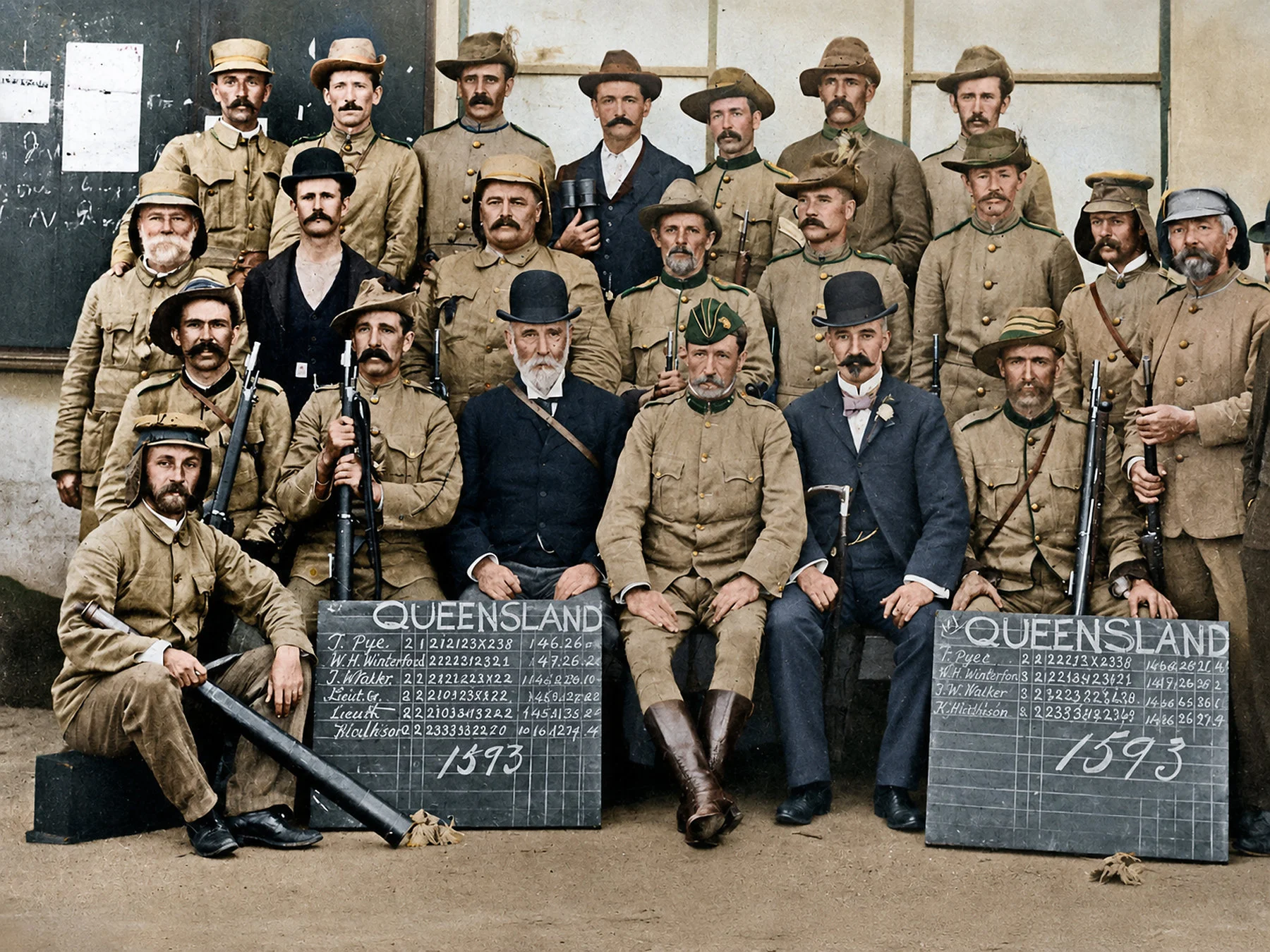
AI colourisation version – 2026
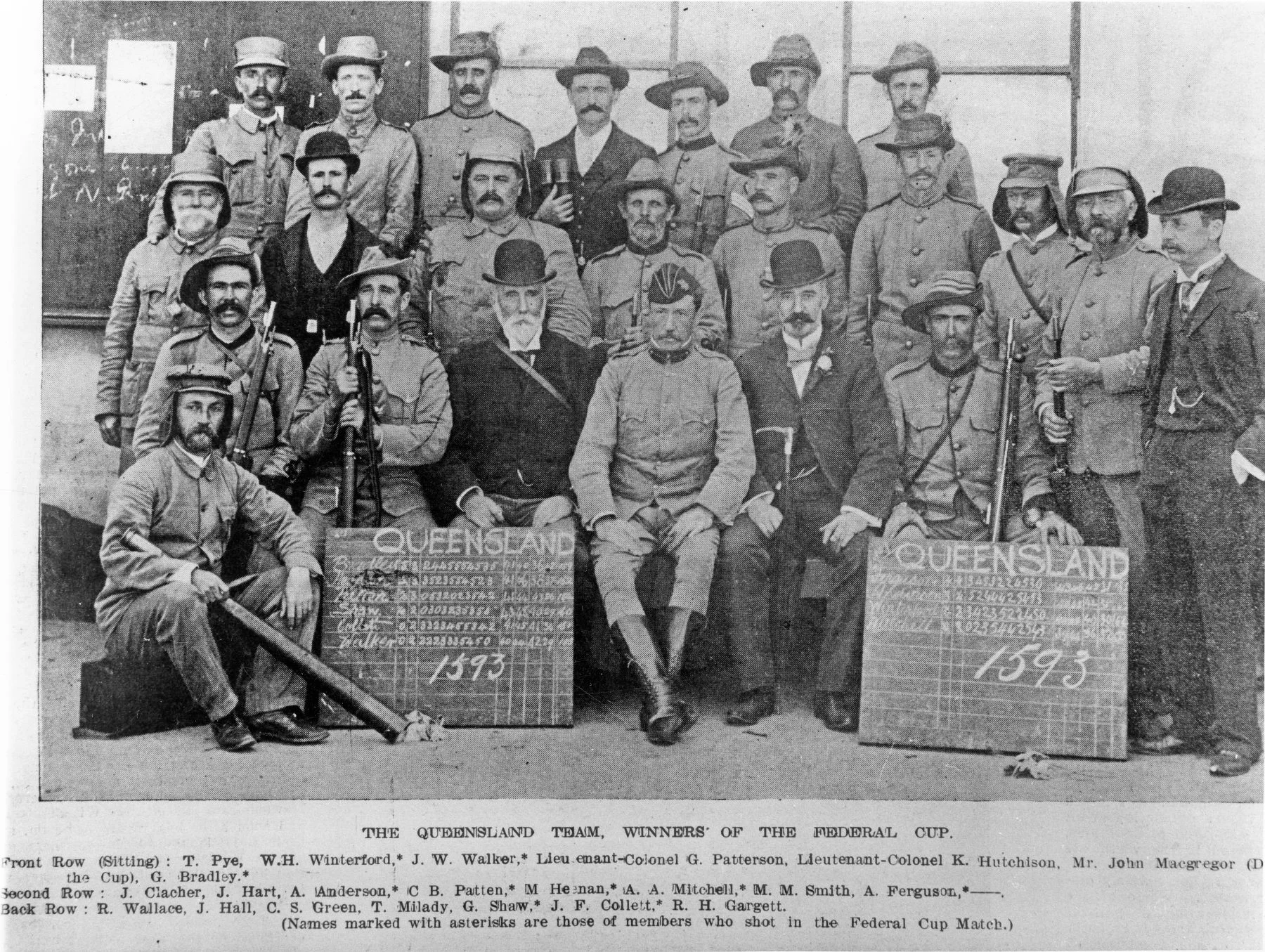
Members of the Queensland rifle shooting team who won the Federal Cup, Queensland, 1899
Details
Original version Copy print : black & white, 1899, Negative number: 12097
Summary Back row: R. Wallace; J. Hall; C. S. Green; T. Milady; G. Shaw; J. F. Collett; R. H. Gargett. (Description supplied with photograph.)
Front row (sitting): T. Pye; W. H. Winterford; J. W. Walker; Lieutenant-Colonel G. Patterson; Lieutenant-Colonel K. Hutchison; John Macgregor; G. Bradley.
Second row: J. Clacher; J. Hart; A. Anderson; C. B. Patten; M. Heenan; A. A. Mitchell; M. M. Smith; A. Ferguson; unidentified.
Copyright status Out of copyright.
Conditions of use You are free to use without permission. Please attribute the State Library of Queensland
Refer: (and for citation) https://collections.slq.qld.gov.au/viewer/IE2815711
George Shaw top row, fifth from the left.
War with Germany
In the early 1900s, rifle shooting was a common and respected activity among members of the Australian army. International competitions, particularly at Bisley in the UK, revealed that Australian marksmen were on par with their British counterparts. This surprised many and highlighted the importance of formal rifle training in the face of rising global tensions that culminated in World War I in 1914.
George Shaw became a Sergeant in the reserve army. These rankings were considered the same for reserve or enlisted.
War with Germany
It was urgent in 1900 for the British Admiralty to prepare for war against Germany. This supported the view that army soldiers do better if they are trained in use of rifles and shooting skills. This was the message promoted due to successful championship shooters competing at Bisley from Colonial countries, of whom G Shaw was a member – countries such as Canada and New Zealand.
In these competitions, Australians were surprisingly seen as equal to British shooters. The Australian States came under the Federation in 1901. Prior to this, Bisley was attended via private funds and donations. In context of the urgency, the Federal Government supported rifle training for the army, making a crucial difference in future warfare, and funded competition travel. Team members were quotered from participating states, with two from Queensland, Shaw being one.
G Shaw went to Bisley in 1901. The team won the highest score to date. In 1907 he had an individual win, and prize of 250 Guineas – about AUD $50K+. Internet searches show no record of Shaw in Bisley 1907, but we have a photograph of the trophy on a postcard.
The “English-Born” Puzzle
From the NRAA members document:
“A new delegate at the meeting was George Shaw. English-born Shaw was one of Queensland’s best rifle shots –
he represented Queensland several times in Federal and Commonwealth Match teams, had won the State associations’ ‘Queen’s’ and ‘King’s’ three times
in succession from 1899, and represented Australia at Bisley in 1902 and 1907.” pages 97, 304.
One of the more confusing research discoveries involved my great-grandfather, George Shaw. When he joined the National Australian Rifle Association in 1906, he described himself as “English-born”. This raised an important question: if George was English-born, was he no longer connected to William Shaw of Ireland, whom I believed to be his father?
For a while, I felt dejected. But why did William Shaw’s shops appear in so many family photographs? Why was I told that William had strongly tried to stop George from opening a firearms and fishing store?
The culture of the time was very different from that of the 1970s. We grew up with university education and were not concerned with carrying on the family business. As an example of this inheritance culture, my father, George Robert Shaw, wanted to marry a Mormon lady. Harold threatened to remove his inheritance if he did. Dad complied. As a child, my older brother was told by Harold that he had the right to inherit everything. Seen in that context, the pressure and disapproval make more sense. George was the eldest surviving son at the time, Thomas having died young. I am very glad George followed his own, ultimately validated, path.
Eventually, a better explanation emerged. Northern Ireland had United Kingdom postal addresses—it was regarded as English by many people, and the troubles in Ireland made it more urgent for some to identify themselves as English. We therefore know that describing himself as English-born was not necessarily in conflict with being related to William, who was Irish. But there was more to it than that.
We did not grow up within the environment, ideas, and culture of the British Empire and the later Commonwealth identity. Anyone within the Empire could, in theory, consider themselves British. One could live in England without the racial distinctions that would later become more significant. The thinking was: I am English because I belong to the Empire, or the Commonwealth. This is a totally foreign concept to us today.
It was only in the 1960s that this idea began to fall apart, for the obvious reason that the original British population was increasingly being outnumbered by people from cultures and ethnic backgrounds that many at the time regarded as foreign.
I eventually found the marriage certificate that proved George’s father was William. That made me smile.
Why Rifle Shooting Matters in Australian History
An unexpected discovery during my research was the significance of competitive rifle shooting in Australia during the late nineteenth and early twentieth centuries. Today the sport occupies a relatively small place in public life, but at the time it attracted enormous public interest and participation, and was at one stage more popular than cricket.
Many leading shooters were connected to military units or reserve forces. Unfortunately, I was unable to access army records through digitised collections or local Brisbane sources, as many of these records are now held in Canberra. Competitions such as those held at Bisley, as well as major events within Australia, helped develop marksmanship skills at a time when the young Commonwealth was considering its defence needs.
As early as 1900, people were openly discussing the possibility of war. British commercial passenger ships were being retrofitted with armaments, reflecting growing international tensions.
Success in the early Colonial and Australian rifle competitions, particularly victories against England, helped place Australia in a respected position within the shooting world. Competitions were organised around quotas from the various states, including Queensland and Victoria. State teams drew competitors from local rifle ranges such as Toowong and Charters Towers, although the locations and clubs changed over time. The Toowong range, for example, was eventually closed.
Such changes were common during a period when settlement continued to expand into newly developed areas. Communities were often established in remote districts reached on horseback, and rifles remained an important tool of everyday life.
Today the focus is on the Belmont Shooting Complex, whose extensive history reflects the development of rifles, pistols, archery, ammunition, telescopic sights, and other technologies. The range continues to operate as a community that hosts local, interstate, and international competitions, while maintaining links with defence-related training and research. It will also play a role in the lead-up to the 2032 Olympic Games.
George Shaw was among the very top of the accomplished competitors of his era, participating in a sporting culture that contributed to wider discussions about military preparedness and national identity. Research into his shooting career therefore provides insight not only into our family history, but also into a fascinating chapter of Australia’s early Federation period.
Many shooters of George’s generation either funded their own participation or relied upon private donations and sponsorship. However, Australia’s success at Bisley, combined with growing concern about international conflict, encouraged the Federal Government to provide funding support for our rifle associations and soldier’s marksmanship training. This meant Australian soldiers could use their rifles effectively. In the years that followed, that training proved essential.
Apart from George’s future role in Brisbane commerce, his contribution as an outstanding marksman in a team context directly contributed to the changes in Federation and training of our soldiers.
Prizes
Sometimes competitors were given the rifle used in the competition, or awarded money. (I suspect other rifles or prizes could have been given.) The 1907 Aggregate Win was 250 Guineas.
It helps to keep in mind there were many competitions besides the Bisley Cup and King’s Prize competitions. The activity back in Australia appears to have been considerable when we read some of the newspaper records.
Fishing
George also competed with his son Harold (I assume with smaller rifles as Harold was in the “miniature” rifle club) and in local fishing.
Won twice, A.F.A Champion Fishing Cup (and three times by his sin Harold).
Stories
Powder Flask
The gun powder flask (refer to Gallery) was found in Mum’s garage in a metal cabinet when she moved into age care. It had a thin rubbery cork I removed carefully as the flask was filled with gun powder. Perhaps at least 50+ years old. It smelt much stronger than fireworks powder, and was quite coarse, like small flakes mixes in with the finer powder. With advice, I drowned the powder in water and flushed it. Now in the QRA Museum, where there is a posted showing a new flask. It seems the original flasks had very small metal tops like an old fashioned bottle top, only way smaller.
Another reference is found at: https://victoriancollections.net.au/items/50b1f5cf2162ef0a4c77378b
Death Registration
George Shaw snr – 329 Nursery Rd, Holland Park QLD 4121, Mt Thompson Crematorium (Mt Gravatt East area)
A prolonged decline associated with chronic alcoholism
I had heard of stories about someone who passed out on the grass lawn at Kangaroo Point after being on the ferry at night, dying of exposure from alcoholism. We did not know any details on this. I think it more likely the description AI gives below.
Mum was always adamant about us not drinking due to alcoholism in the family genetics. I do not drink alcohol. Dad had a few beers but that was all. Mum would also not permit firearm collections in our house either.
I was deeply saddened to see the death registration certificate list pulmonary oedema and chronic alcoholism.
Here is an AI summary of the condition:
Chronic alcoholism (or Alcohol Use Disorder) causes widespread systemic damage. Pulmonary oedema means there was an accumulation of fluid in the lungs. This makes breathing increasingly difficult because the air spaces that normally fill with air become filled with fluid.
On a death certificate, pulmonary oedema is often the immediate cause of death rather than the underlying disease. It can result from:
Heart failure or heart disease
Kidney disease
Severe infections
Liver disease
Long-term alcohol-related damage to organs
Chronic alcoholism refers to long-term, excessive alcohol consumption over many years. In early 20th-century medical terminology, this was commonly used as a diagnosis when alcohol dependence had led to significant health deterioration.
Chronic alcoholism could contribute to:
Liver damage (cirrhosis)
Heart disease (alcoholic cardiomyopathy)
Malnutrition
Weakened immune function
Neurological problems
General physical decline
When both appear on a death certificate, the doctor may have been indicating something like:
Chronic alcoholism → damage to the body (often the heart and/or liver) → pulmonary oedema → death
In other words, my great-grandfather may not have died directly from alcoholism itself, but from the effects it had on his organs, which eventually led to fluid accumulating in the lungs.
It’s worth remembering that medical diagnosis in the late 19th and early 20th centuries was less precise than today. Doctors did not have modern imaging, blood tests, or many of the diagnostic tools we now take for granted. As a result, “chronic alcoholism” on a death certificate sometimes reflected a doctor’s clinical assessment based on the person’s history and visible symptoms rather than a detailed medical investigation.
This doesn’t tell us the circumstances, the reasons, the social pressures, or the broader story of the person. In the late 1800s and early 1900s, alcohol use was also viewed and recorded differently than it is today.
From a genealogical perspective, the certificate is giving a glimpse of your great-grandfather’s final illness, not a complete account of his character or life.
Where is Eveline?
The signature 1907 photo commemorating George’s earlier Bisley competition has been heavily hand painted. We were told it was to remove the image of his wife Eveline due to an affair. We are aware of human nature and a number of affairs – why these may happen. For example, if George was always away with overseas visits, the shop, local and interstate competitions, likely dysfunction from having been in a family of ten, where parental upbringing was strict and emotionally detached, (as evidenced by threats to not open a firearms/fishing store, and the pattern of threats from Harold to my own father) is it not more likely Eveline would be more susceptible to an advance upon her? And if there were no foundational church background, less able to forgive her?
And we do not know how his alcoholism developed. This is the stuff of life that interests me. His alcoholism had a heavy price – death. It also meant characteristics were passed onto his family, and we reasonably observe financial loss across the generations. I am not sure of the extent of this loss, but it may have been far more startling and significant than I am aware of.
Retail Stores – George Shaw 1908-1928
I have included various links and brief summaries of the retail stores in Edward and Albert Street. To follow up further would require some detailed research into Brisbane’s retail history. This should include the QLD State Library.
The Retail Stores
George Shaw Sports Store (originally operating as George Shaw & Co. and later George Shaw & Sons), moved locations across Brisbane’s central business district as it expanded over the decades.
The store’s address at 194 Albert Street was its long-term home later in its history.
Verified:
George Shaw & Co. 1908 – early1928, 106 Edward Street, Brisbane (near corner of Mary Street – fairly close to the riverfront).
March 1928 -1979 194 Albert Street (various changes of family ownership)
Originally operating as George Shaw & Co. and later George Shaw & Sons – the store was transferred to Harold William c.1930/31 but still called G S & Co. in 1937 – Trove article. (There is confusion around this. Mention of G S & Co in 1937 Trove article and we have this on a handwritten photo.)
Renamed George Shaw Sports Store by my father George Robert Shaw. Dad commenced work in the store at age 17, c. 1945 – Trove article.
Renovations 1965 – 1966 with temporary premises at Woolloongabba. Dad possibly took over in 1963 – calculating backward date by Trove article.
Reference: https://trove.nla.gov.au/newspaper/article/71270482?searchTerm=george%20shaw%20and%20co
Change to Albert Street likely a business opportunity as Brisbane changed its city centre activity towards Adelaide Street and the new City Hall and clock tower.
Shops sold specialised sporting gear, focusing on firearms, ammunition, and fishing, but included other items such as saddlery.
Archival advertisements from the 1910s and 1920s describe the business as “George Shaw’s Sports Depot in Edward Street” or “George Shaw & Co., late of Edward-street, Firearms, Ammunition, and Fishing Tackle Specialists”.
The Move
Needing more space to accommodate a rapidly growing post-war trading market, the business made a highly publicized move. \
When George advertised the Albert Street premises as being near City Hall, he was associating the business with Brisbane’s most modern civic development. City Hall was the symbol of Brisbane’s growth and civic pride.
The Announcement: Public archival notices from March 1928 declared that “George Shaw & Co., late of Edward-street… removed to more commodious premises in ALBERT-STREET, opposite T. & G. Buildings”.
Note: T&G was demolished and rebuilt when I was at school. I recall the tractors on concrete floors demolishing the building. It helps to view very early photos of the city to get an idea of city life (and the trams) the style of architecture, and number of building levels. Architecture was distinct and changed due to continual development.
Advertisements during the 1930s frequently anchored the location by saying “Albert-st., near Town Hall” to help shoppers find them.
The Town Hall / City Hall proximity
Because 194 Albert Street sat between Elizabeth and Adelaide Streets, it was just around the corner from the old Brisbane Town Hall (and the current City Hall built in 1930). Staff and family members would have constantly traversed Adelaide Street to get to the shop.
In 1928 pedestrians did most of their shopping on foot and landmarks mattered. Early photographs show much pedestrian activity in the areas such as Queen and Albert streets. Today it would be like saying “We’re just beside the new major transport hub”. This conveys prestige and visibility.
The Albert Street area around City Hall, Albert Square, the church, theaters, and retail businesses was becoming one of Brisbane’s busiest pedestrian districts. Contemporary descriptions show Albert Street running directly in front of City Hall and Albert Square before later alterations created the modern King George Square layout.
There may have been other advantages such as larger frontage and better display windows, lower rent, more floor space, improved storage for firearms, ammunition and fishing tackle. I recall my father had the mid-upper floor with timber shelving racks, a packing area at the back, the rubbish collected at the back of the lane-way, and on the upper level beside the gunsmith workshop more storage shelves and a stair leading up to the attic with care around storage due to the excessive attic roof heat.
There is no evidence of any decline in Edward Street commerce.
Refer:
https://www.qagoma.qld.gov.au/stories/go-back-in-time-to-vida-laheys-wintry-sunshine-day-overlooking-albert-street-methodist-church-in-brisbane?utm_source=chatgpt.com
The George Street Gunsmith Connection to Carl Scholtz:
Brisbane local history forums and old trade directories note that there was a prominent, long-standing gunsmith and sports shop. People knew each other and would assist between shops such a Carl Scholtz workshop, and Robinson’s Sports Store.
Links:
https://trove.nla.gov.au/newspaper/article/285043584
https://trove.nla.gov.au/newspaper/article/178441316
https://trove.nla.gov.au/newspaper/article/286263536
https://trove.nla.gov.au/newspaper/article/177050214/19651120
https://trove.nla.gov.au/newspaper/article/286268988
https://trove.nla.gov.au/newspaper/article/285043584
Refer to Dad’s Shop (George Shaw Sport’s Store):
http://www.claytarget.com.au/joomlatools-files/docman-files/CTSN/1967/1967_V21_01_Oct.pdf
QLD STATE LIBRARY:
https://onesearch.slq.qld.gov.au/discovery/fulldisplay/alma99184083481002061/61SLQ_INST:SLQ
“This building, constructed circa 1865 for William Cairncross, is the oldest surviving building in Albert Street and the oldest block of shops in Brisbane. It was designed by prominent architect James Cowlishaw, who planned numerous commercial and residential buildings in Brisbane between 1861 and 1884. The building was tenanted by a large variety of retailers throughout the nineteenth and twentieth centuries but has most consistently been used as a venue for cafes, restaurants and other eateries.”
194 Albert Street is shown as the last two shop windows and frontage on the right of the photo beside the laneway.
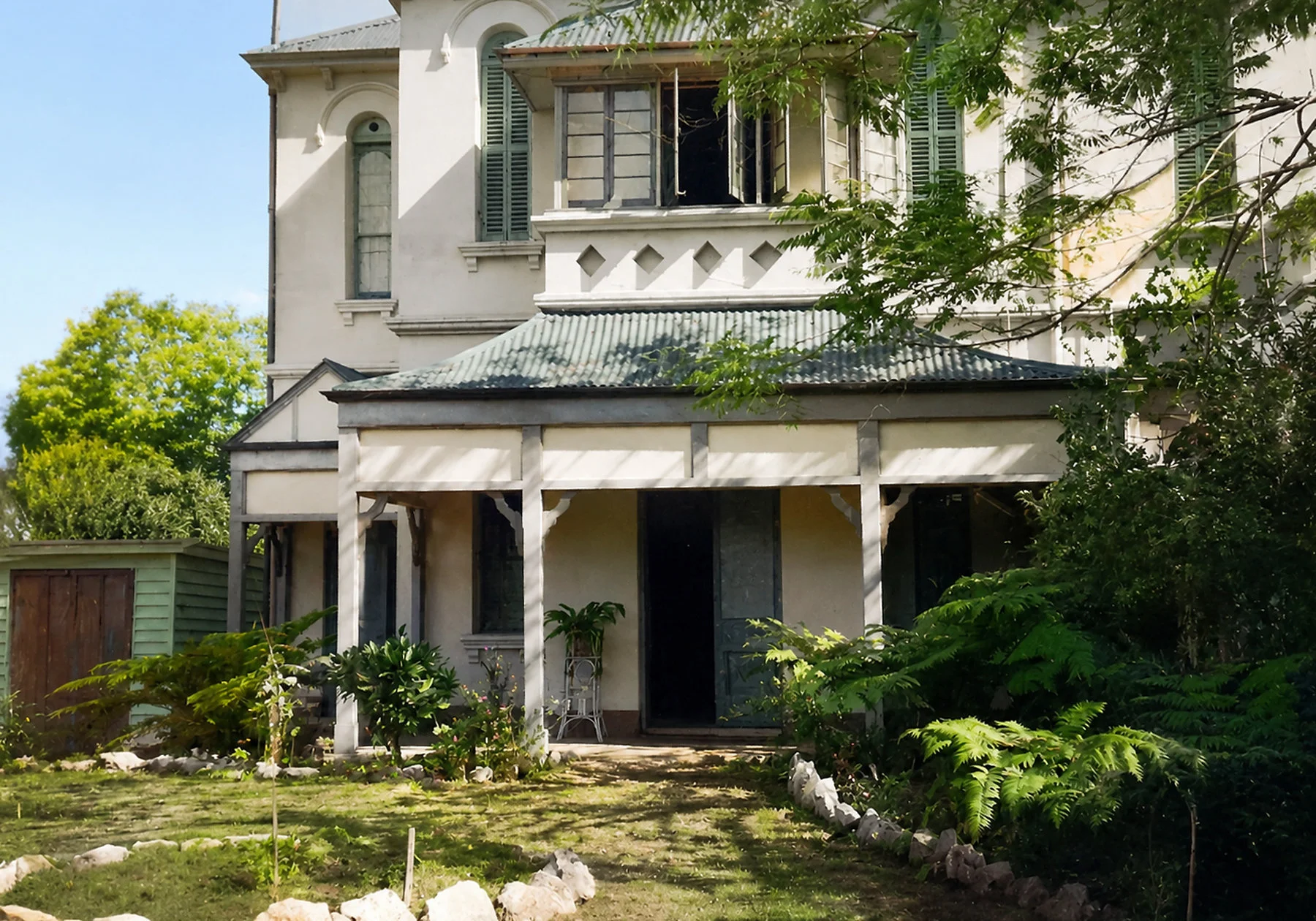
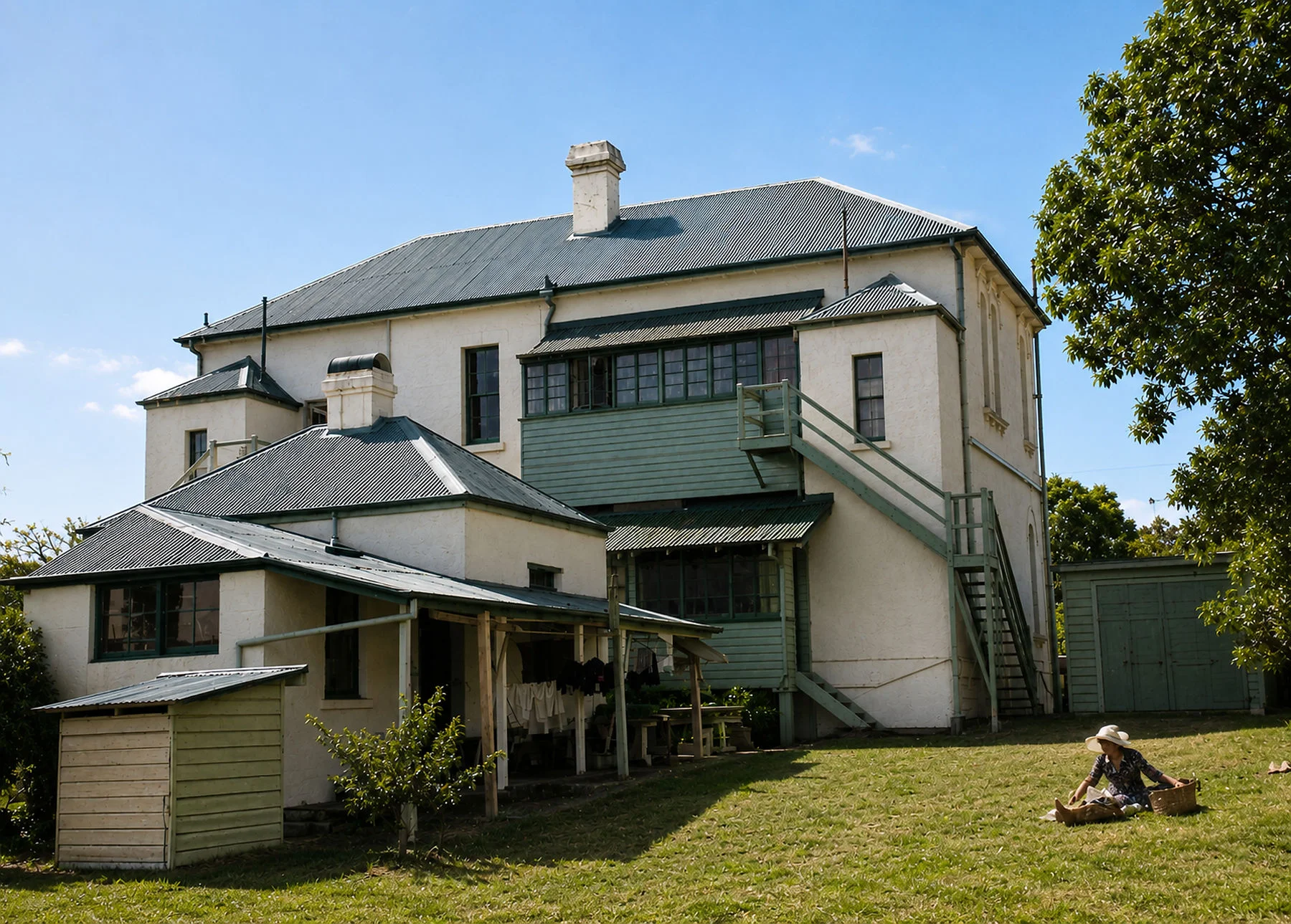
Silverwells House, Main Street, Kangaroo Point
We have difficulty tracing the Shaw residence locations.
There was ownership at Silverwell house and Clayfield’s “Shrigley House”. It is not likely Silverwell was rented, as said in Wikipedia.
267 Main Street, Kangaroo Point is an iconic heritage listed duplex house from the 1800’s, a large premise.
George Shaw likely lived there at some point with his son Harold.
Dad (George Robert Shaw) lived there until he married in 1952.
The staircase was very long and steep. The front shows the rock garden (circular) which Mum continued as a style (using dark grey slate or rocks) on our own properties in the 1960’s at Moggill. Later at Chapel Hill’s second home in the 1980’s, large sandstone coloured boulders.
Harold Shaw then moved to Clontarf at Woody Point in Redcliffe.
While my Nana did sports and apparently was reasonably active, Harold (my grandfather) was less active. As he grew older the house was too big, the long staircase was hard to cope with, the noise from Main Road to Story Bridge excessive. The family was stressed by local security issues. We did not see our great grandfather as our generation started in 1956 and 1958.
There was a residence, probably with William Shaw, at the Clayfield “Shrigley House” as well. My mother Elizabeth recalls both houses and we have photos of Silverwell.
Refer to Gallery for more images
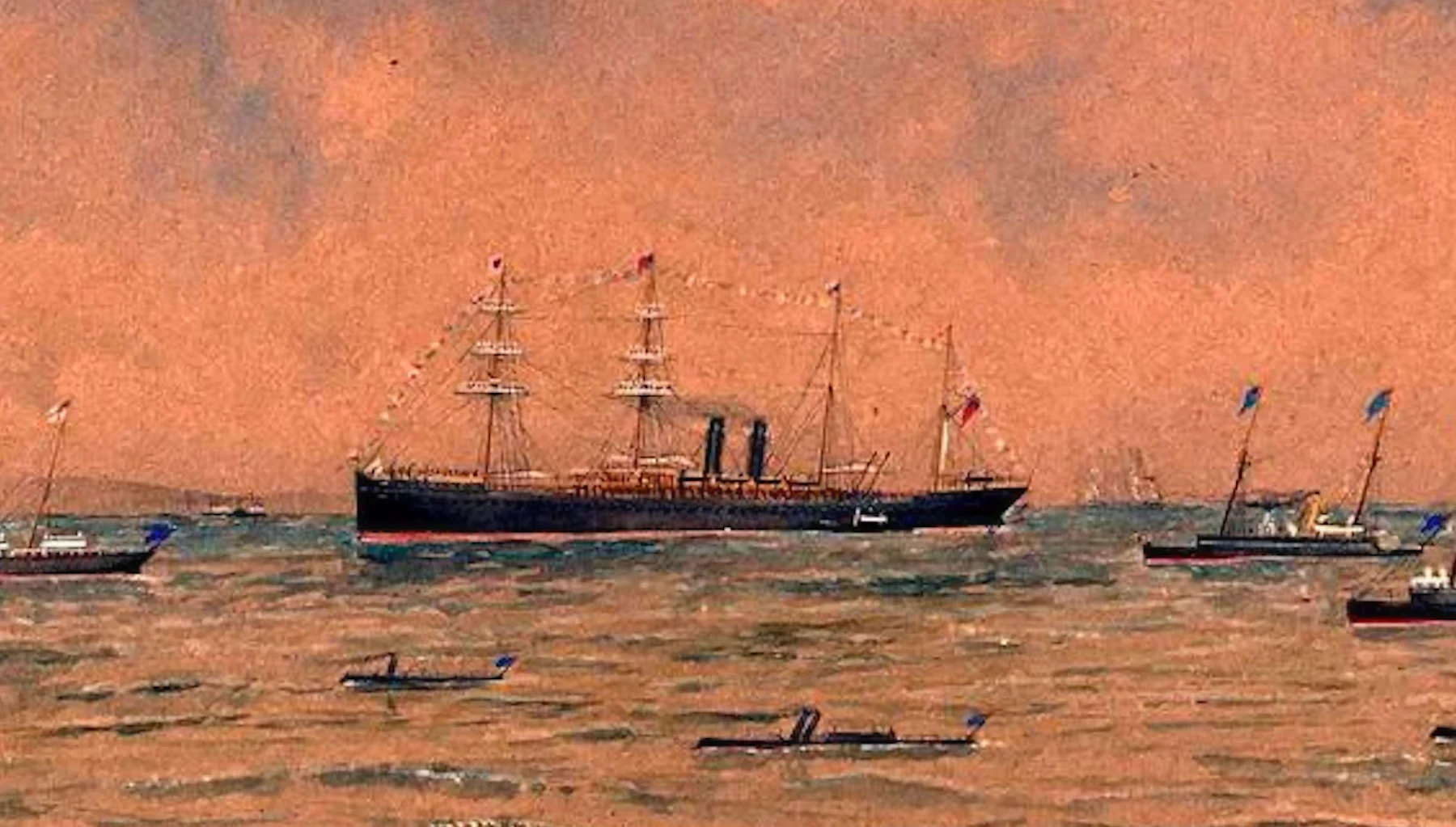
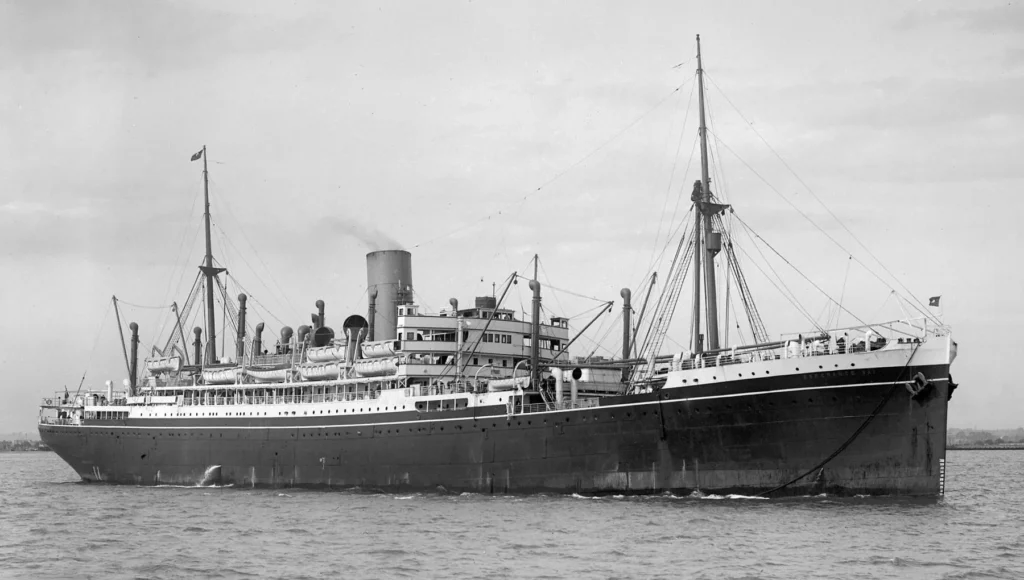
Here shown a sketch of R.M.S Rome, one of the ships George was a passenger.
No follow up on travel time. It is reasonable to assume a percentage of people got sick or died on long voyages. May be why George’ competition clothes did not fit him in the competition photo.
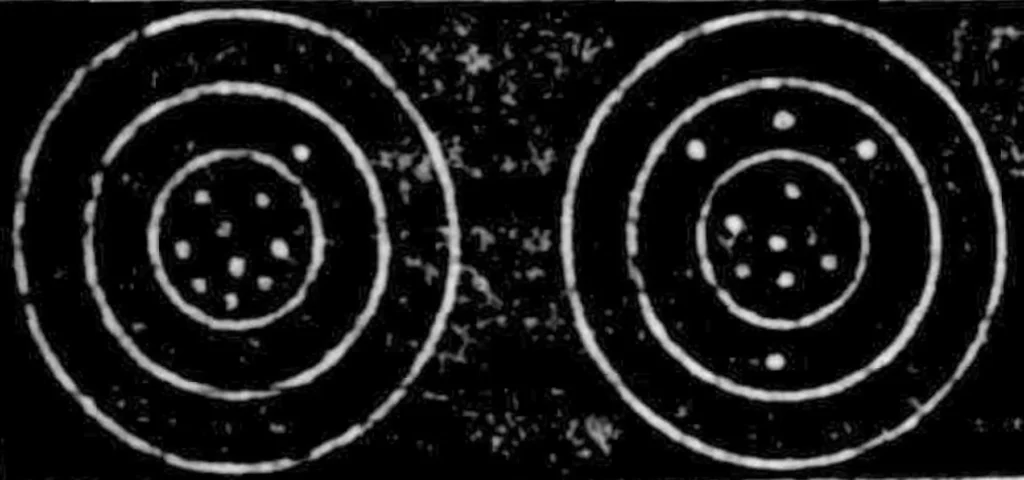
(1) These are the typical targets used by the marksmen with match rifles for distances such as 300, 500, 600, 700 and 900 yards. Rifles may have been given to the men for having won the competition. The rules of the competition vary over time. G. Shaw was one of the highest achieving champion shooters from the “colonial teams”. Bisley 1902 used 7 shots at 200, 500, and 600 yards. Trove: https://trove.nla.gov.au/newspaper/article/211462079
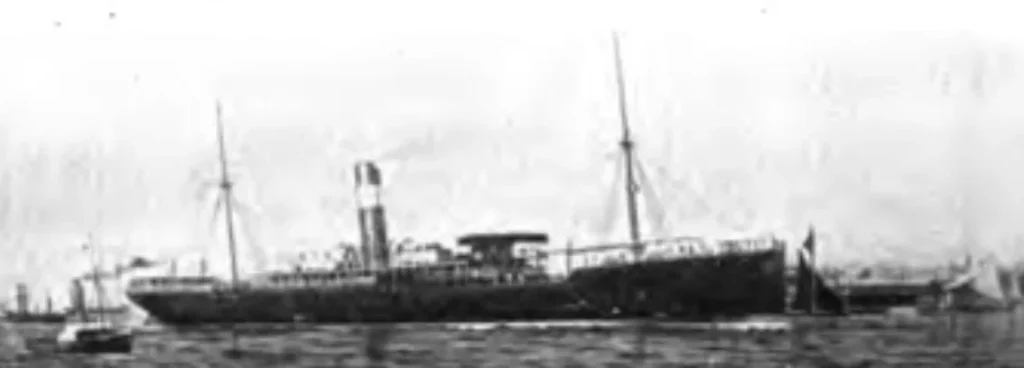
(2-3) The types of ships between Australia and England – examples 1903, 1922. Slower ships up to four months. On record, I was advised three months for Bisley by QRA.
Newspaper Article: https://paperspast.natlib.govt.nz/newspapers/EP19020724.2.38
For various images of Bisley see:
https://www.google.com/search?q=bisley%20cup%201902&udm=2&tbs=rimg:Cbt4zFSjgYw6Yb_1tYCRhTOLBsgIAwAIA2AIA4AIA&client=firefox-b-d&hl=en&sa=X&ved=0CBoQuIIBahcKEwjwopLHqsiMAxUAAAAAHQAAAAAQBw&biw=2078&bih=1047&dpr=2
Timeline
Known Life Events
Birth: 1875, Northern Ireland (known as UK)
Age 8: Arrived in Australia with Father’s family 1883
Age 21: Married Eveline Hobbs (age 20) 1896
Age 24: Queens Prize 1899
Age: 25: King’s Prize 1900
Age 26: Harold born. Governor’s Cup 1901
Age 27: Bisley Cup 1902
Age 28: Florence Eveline Shaw born
Age 30: Winifred Edith Shaw born
Age 32: Aggregate Cup 1907. 250 guineas prize. Commemorative photo and Kolapore cups made.
Age 33: Opened George Shaw & Co. 106 Edward Street, 1908
Age 53: Moved to 194 Albert Street 1928
Shop transfer to Son, Harold (other share holders)
Other: A.F.A. Club Champion Fishing Cup (2 times)
Age 78: Death 1953