From chatGPT:
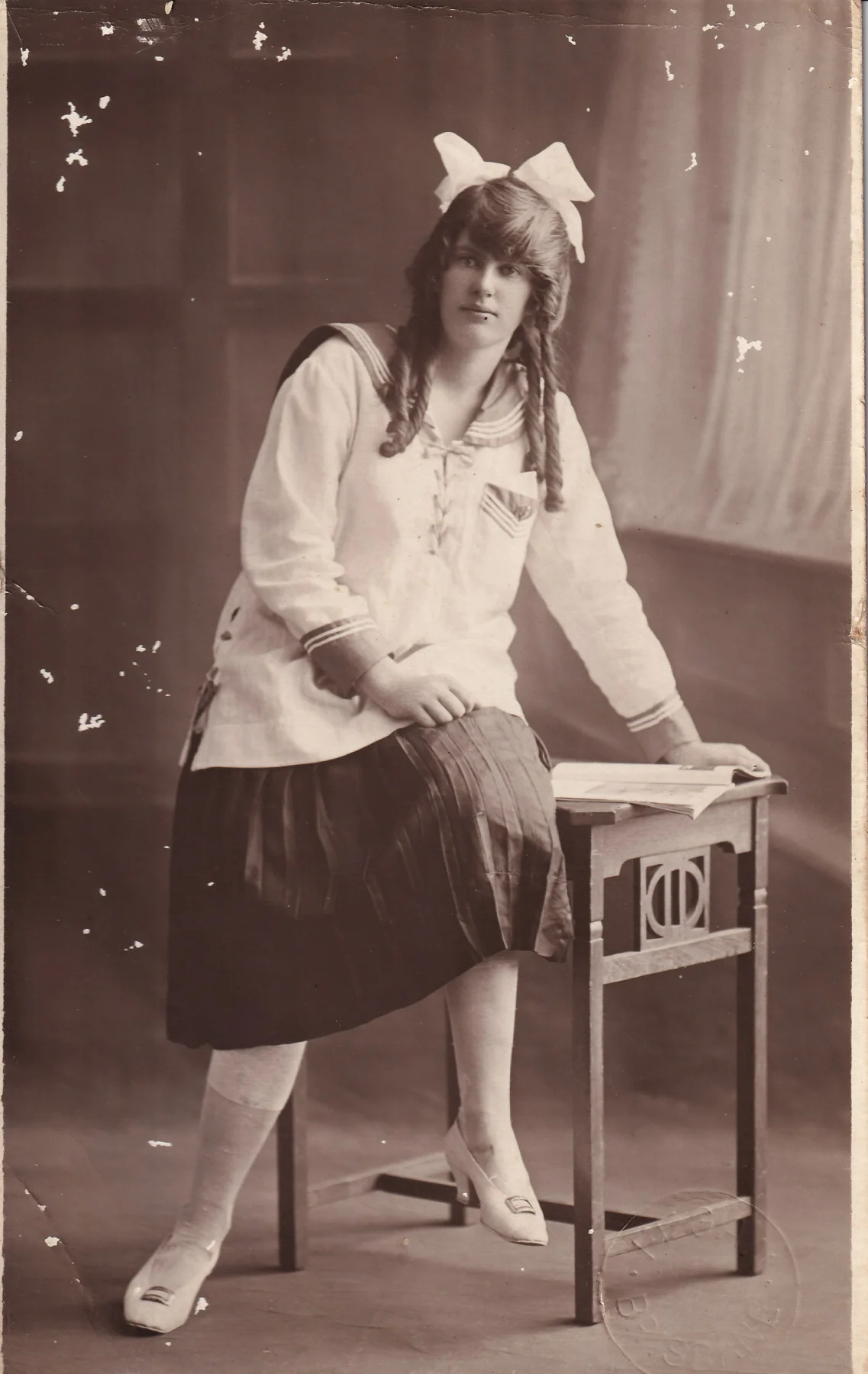
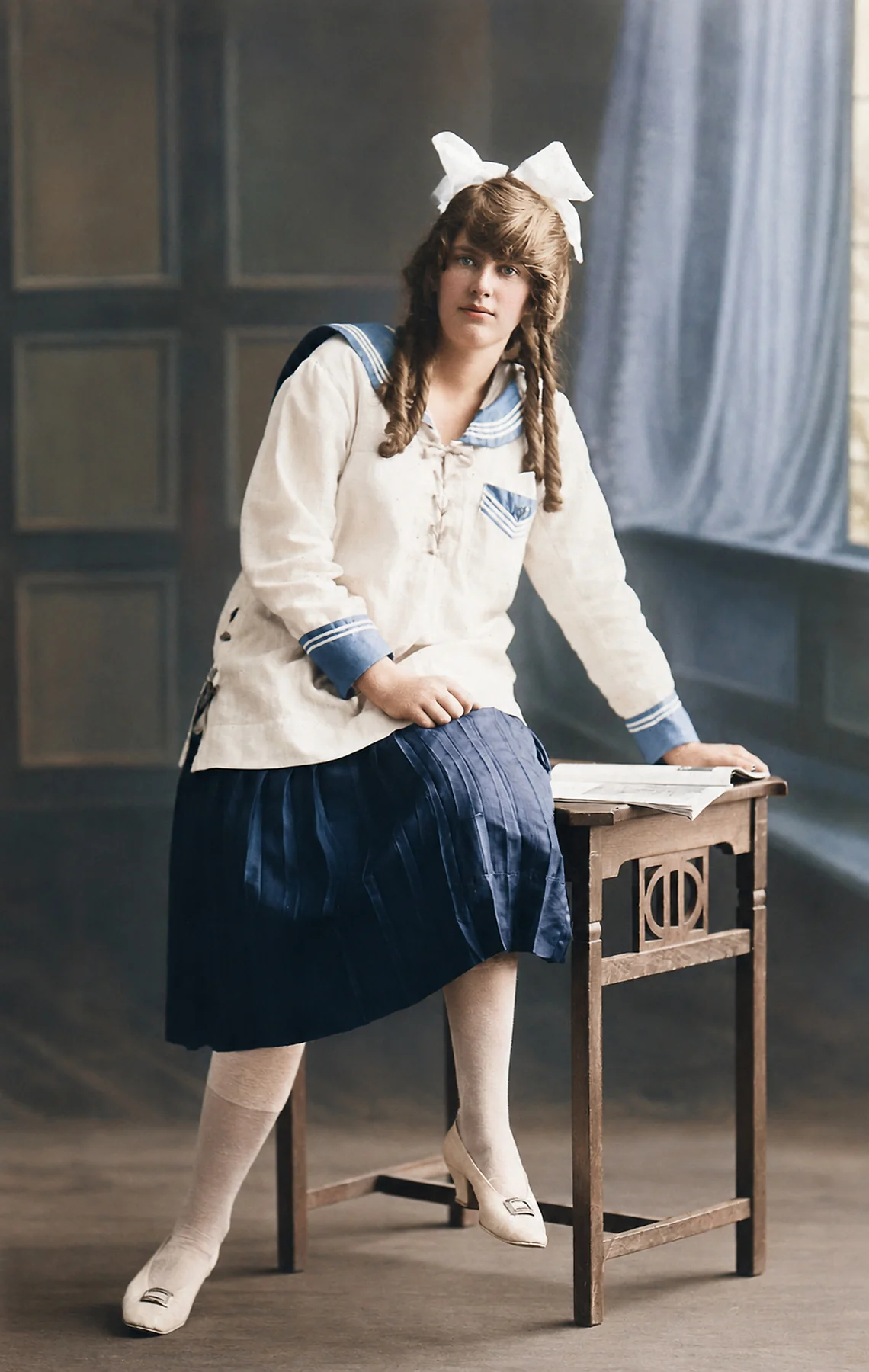
This is a wonderful photograph because it contains several clues. While I can’t be certain of any one interpretation, I’d say it’s very typical of a Brisbane studio portrait from around 1918–1923, and there are some interesting details.
The room
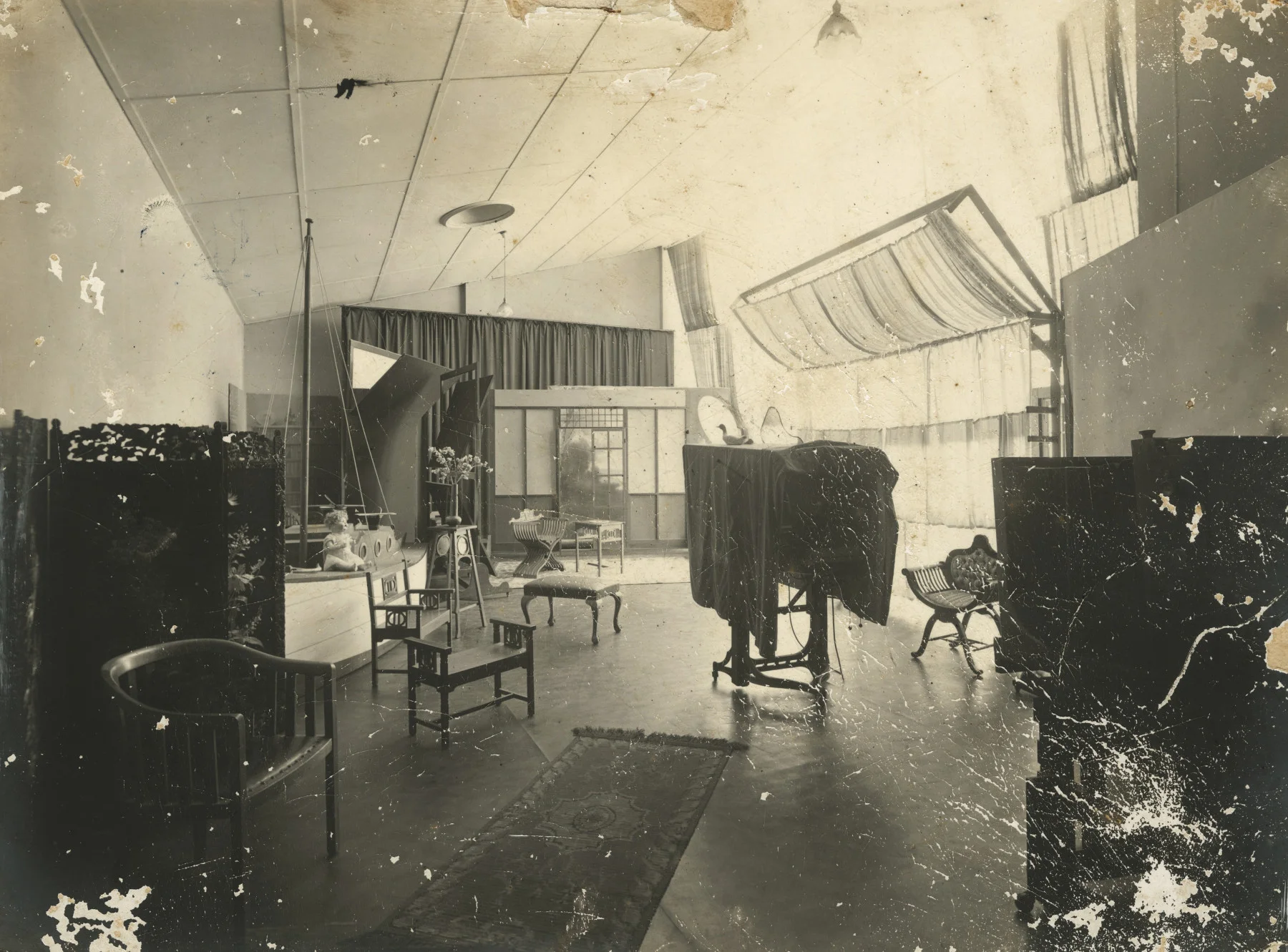
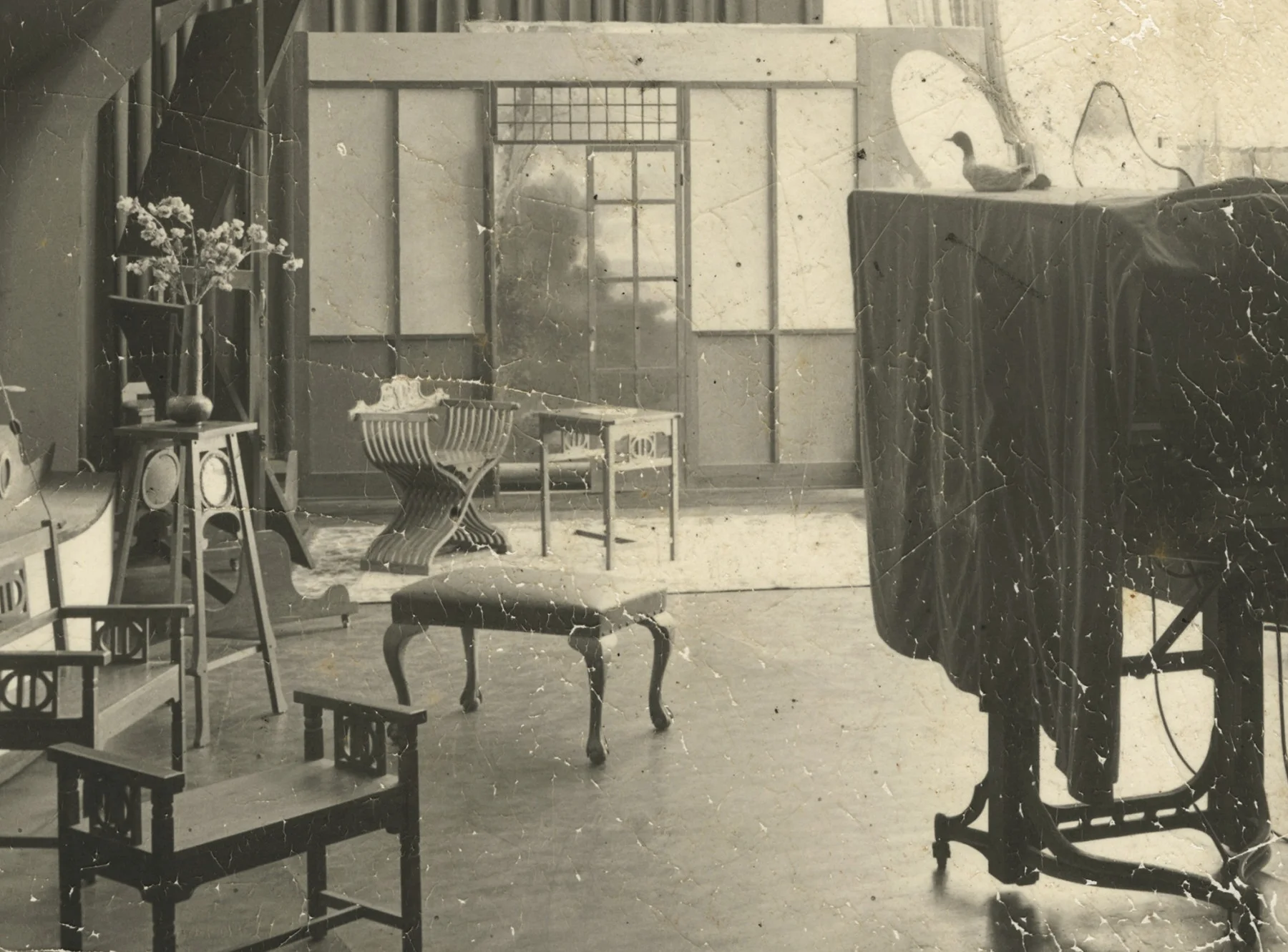
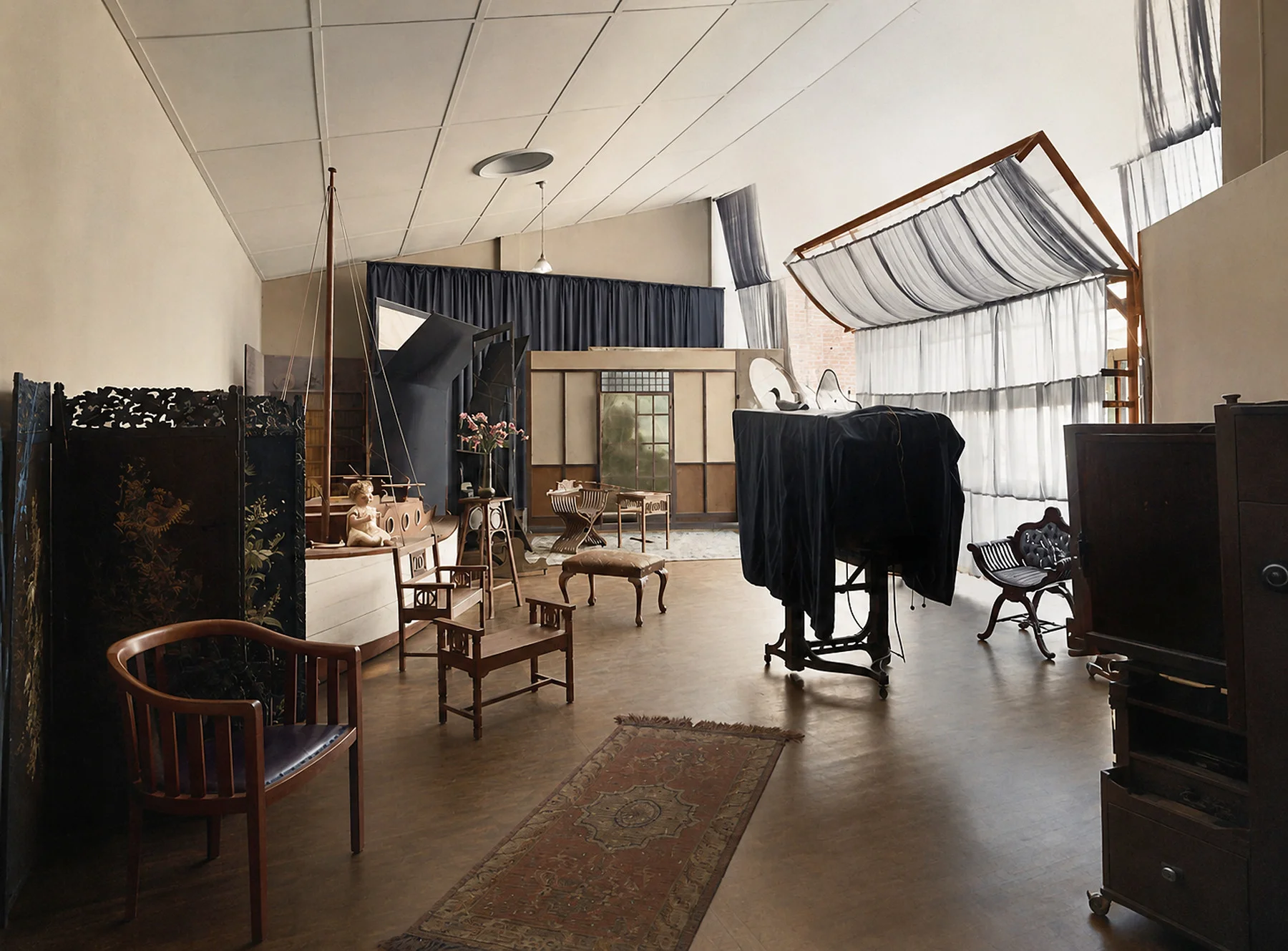
I don’t think this is a real room.
Professional photographers of the period commonly had elaborate studios with interchangeable backdrops and furniture. Looking at your photo:
- The panelled wall on the left is probably a painted studio flat rather than actual timber panelling.
- The curtain on the right has the appearance of a heavy studio drape used to soften the composition.
- The floor looks like the photographer’s studio floor rather than a school or home.
- There is very little decoration because the emphasis was meant to be on Florence herself.
So I’d lean towards this being a photographer’s studio in Brisbane rather than a classroom.
The table
The table is particularly interesting.
It appears to be a small Arts and Crafts or Edwardian occasional table, with:
- square legs
- a stretcher near the floor
- decorative geometric cut-outs in the side apron
That geometric design was very fashionable in the late Edwardian period and early 1920s.
It was almost certainly a studio prop, chosen because it gave the sitter something natural to rest a hand on.
Photographers often owned:
- little tables
- books
- columns
- ornate chairs
- wicker furniture
- faux balustrades
and rearranged them for every portrait.
The open book
The book is another clue.
Rather than simply standing, Florence is posed with a book.
That often conveyed ideas of:
- education
- refinement
- intelligence
- respectability
rather than documenting what she was actually reading.
It was a very common portrait convention.
Her blouse
I think this is probably the most informative part of the image.
She is wearing what we’d call today a middy blouse or sailor blouse.
Features include:
- broad sailor collar
- striped trim
- lace-up front
- matching striped pocket
- loose comfortable fit
These became extremely popular after about 1915.
Girls and young women wore them:
- to school
- for tennis
- for picnics
- while travelling
- for casual portraits
The style came from Royal Navy uniforms but became everyday fashion throughout Britain and Australia.
Her skirt
The skirt is a dark pleated skirt reaching well below the knee.
Combined with the sailor blouse, it looks remarkably like what many girls wore at:
- secondary school,
- college,
- or simply as fashionable day wear.
It doesn’t necessarily indicate a school uniform, although it certainly could have inspired one.
The bow
The enormous white bow was very fashionable among teenage girls around the late 1910s.
It gives the portrait a youthful feel.
My impression is that Florence is probably somewhere around 16–20 years old.
Her shoes
The shoes are also helpful.
They appear to have:
- medium heels
- decorative buckles or ornaments
- a fairly pointed toe
Those are consistent with fashion around 1918–1922.
Overall impression
To me, the photograph says:
“A young woman entering adulthood.”
It doesn’t have the formality of a wedding portrait or the stiffness of Victorian photography. Instead, she has one foot resting naturally, one hand on the table, and she’s looking directly toward the camera with a relaxed expression. That kind of pose became much more common after the First World War.
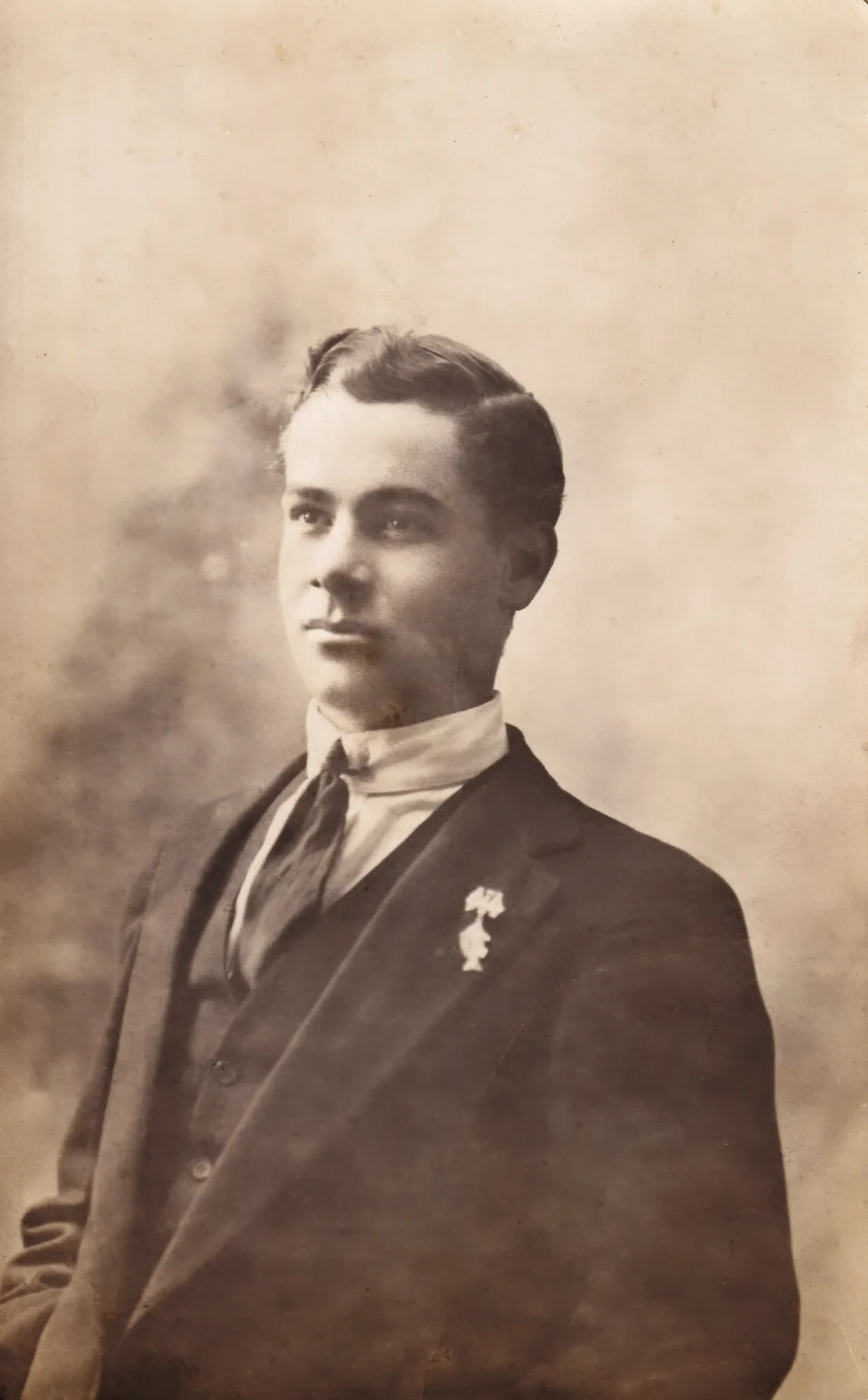
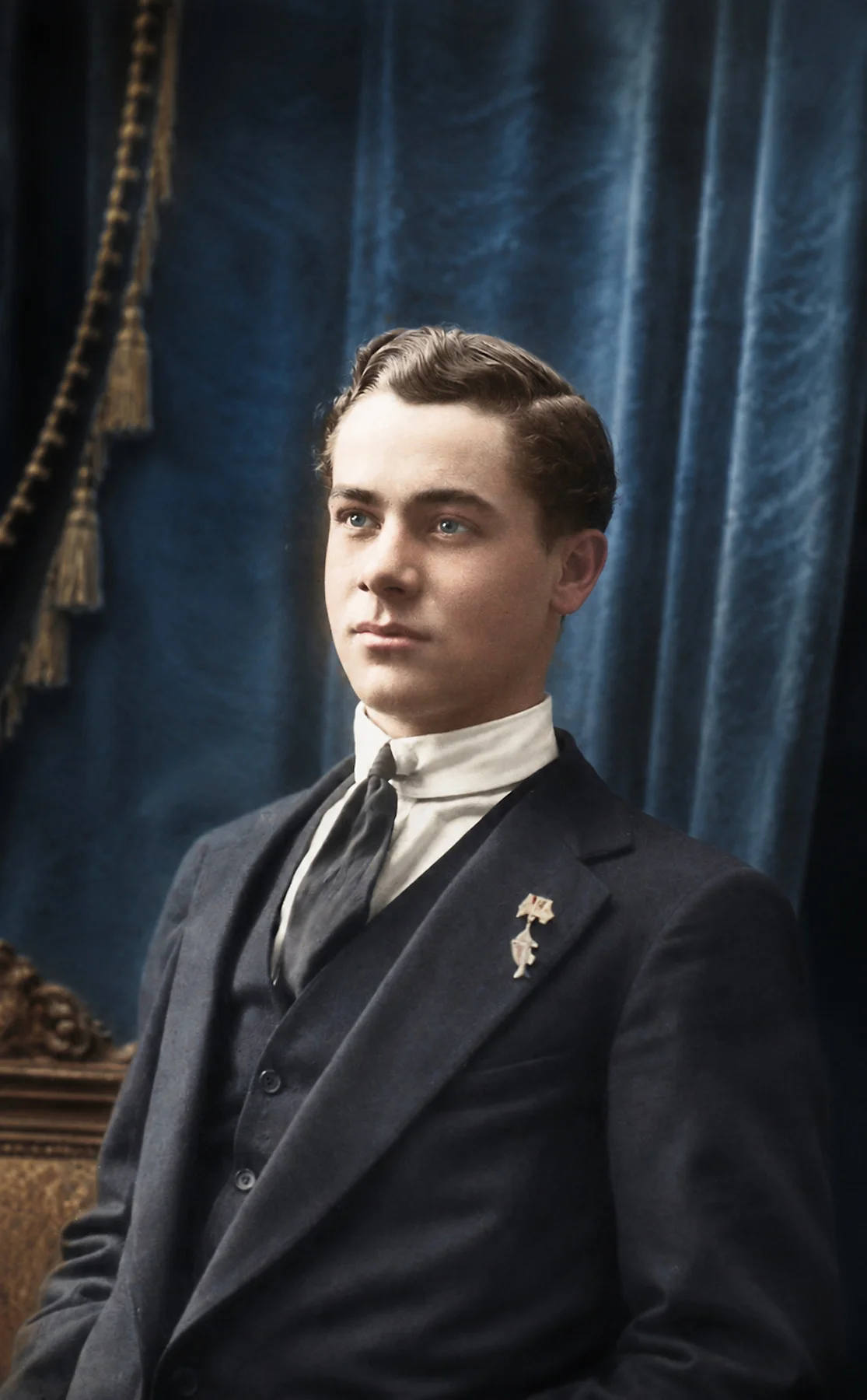
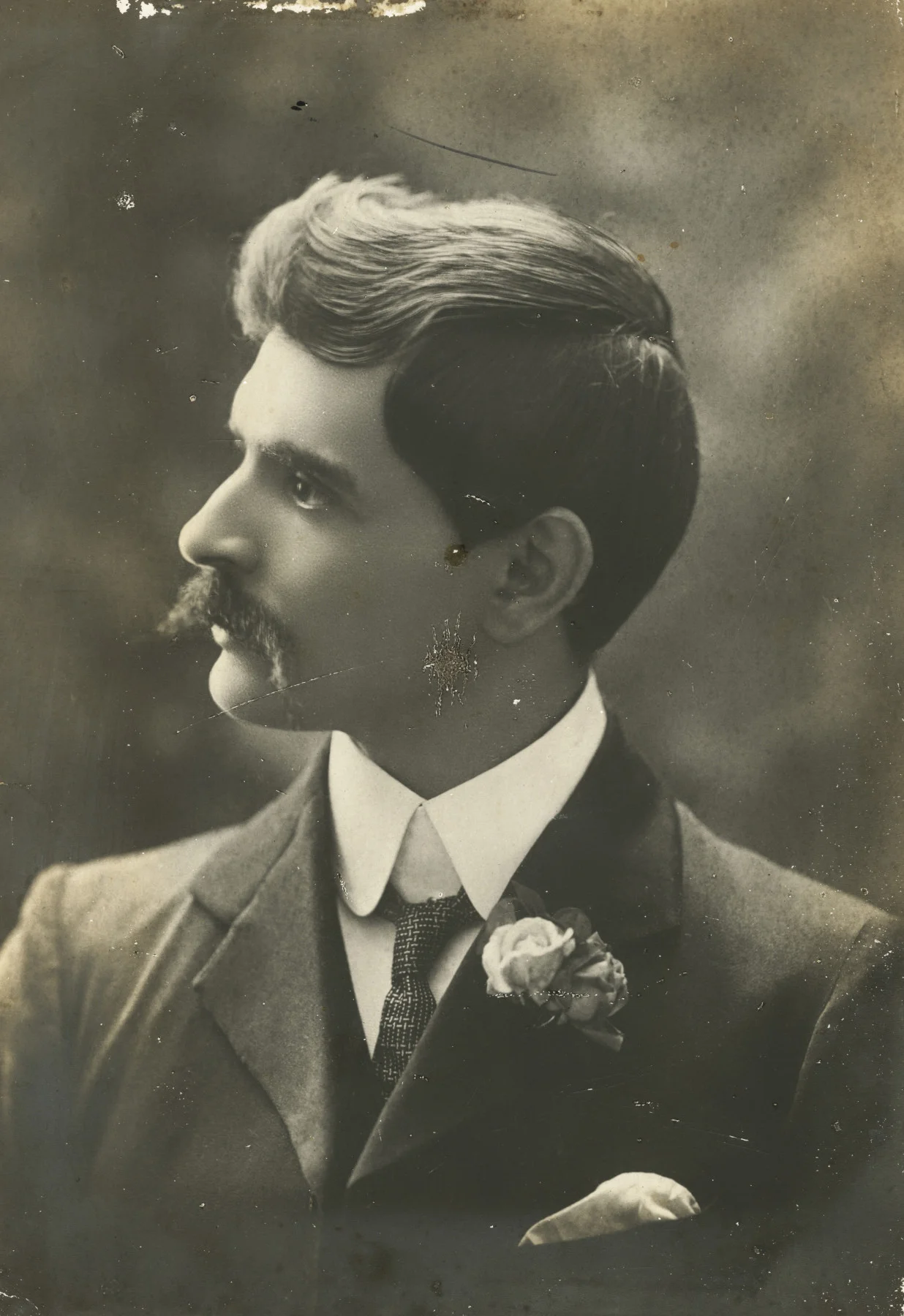
If Harold’s portrait dates to about 1917–1919, I wouldn’t be surprised if Florence’s portrait was taken within just a few years of it—perhaps before they married, when they were both in their late teens or early twenties.
One little detail I especially like is that she isn’t posed rigidly. The photographer has arranged her with a slight lean onto the table, giving the portrait a sense of confidence and personality. It feels less like a formal record and more like an attempt to capture the person she was. For a family historian, that’s one of the nicest qualities of photographs from this period—they begin to show character as well as appearance.