

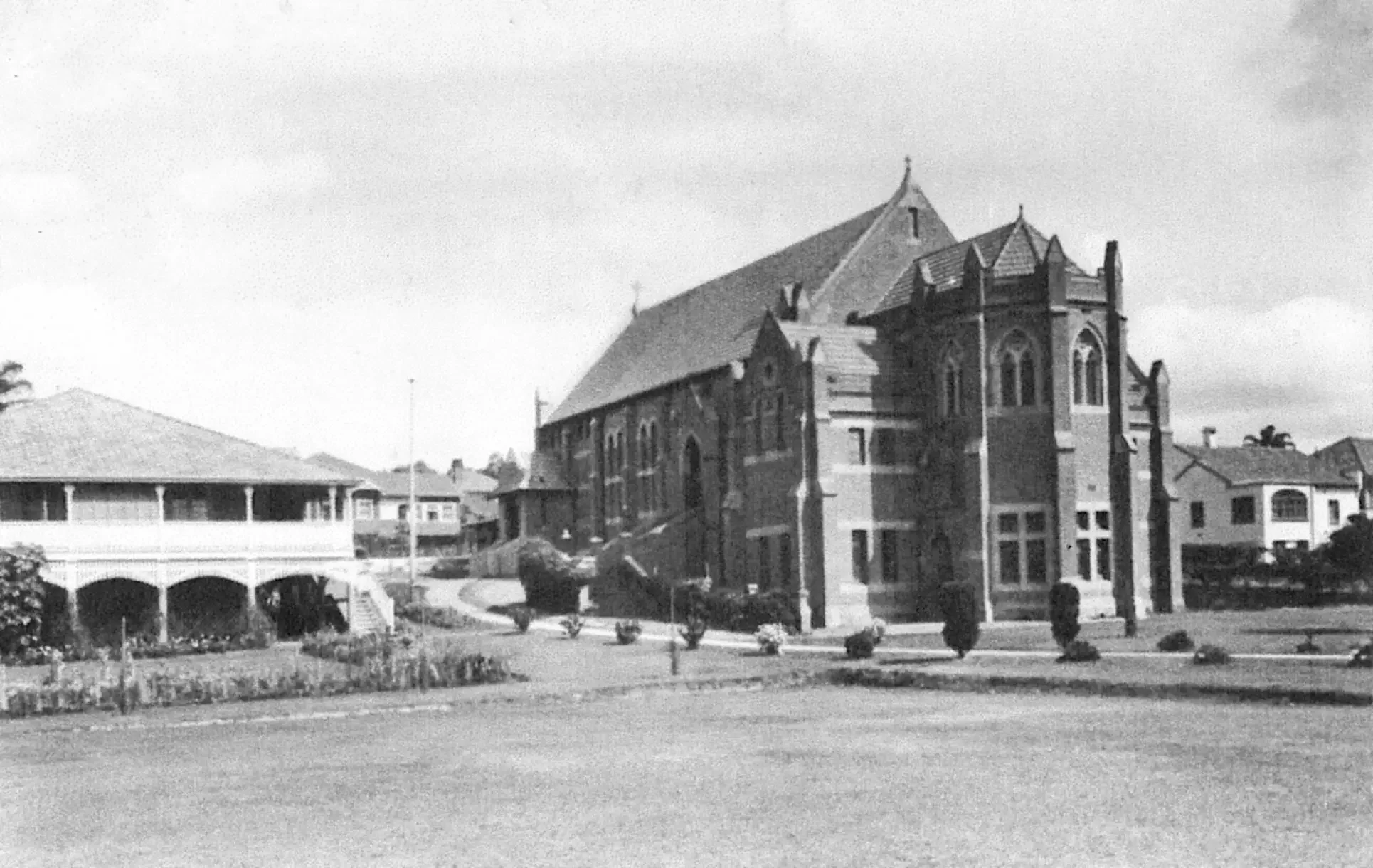
Church and Rectory c.1920
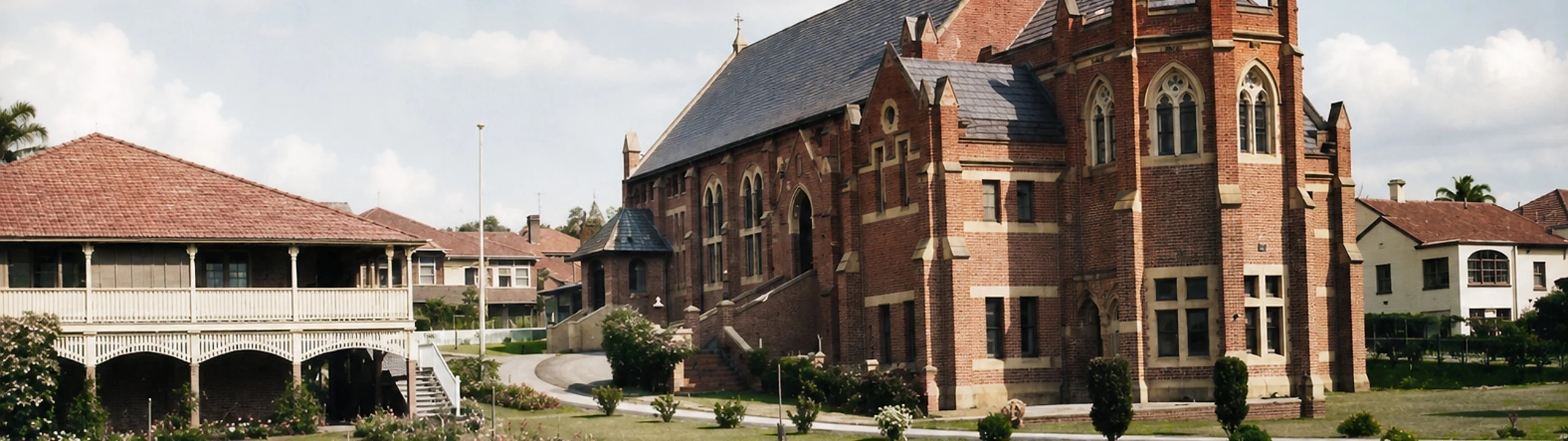
Church and Rectory c.1920
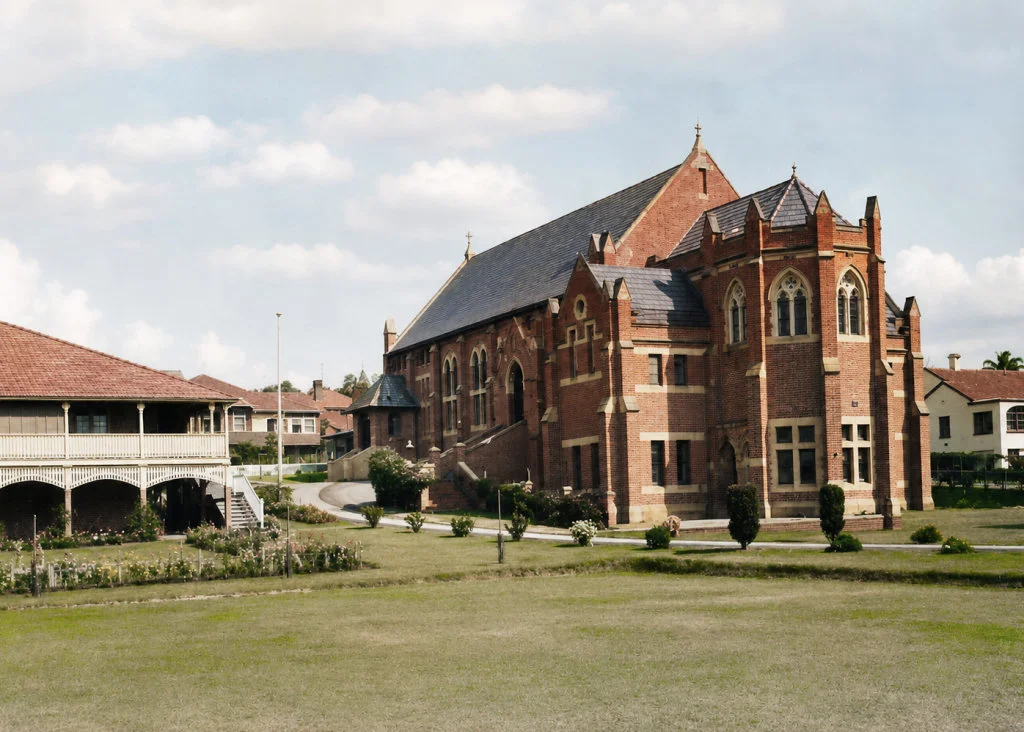
Church and Rectory c.1920
A Place of Prayer & Reflection
St Augustine’s is open during the week for quiet reflection and prayer. For entry to the main Church, see our Office staff – hours 9am-12pm, weekdays.
Visitors are welcome to spend time in the church grounds, memorial garden, or Columbarium Chapel beneath the church. Our lawns and trees are a great place for lunch.
Many people visit simply to enjoy the peaceful surroundings in the middle of Hamilton.
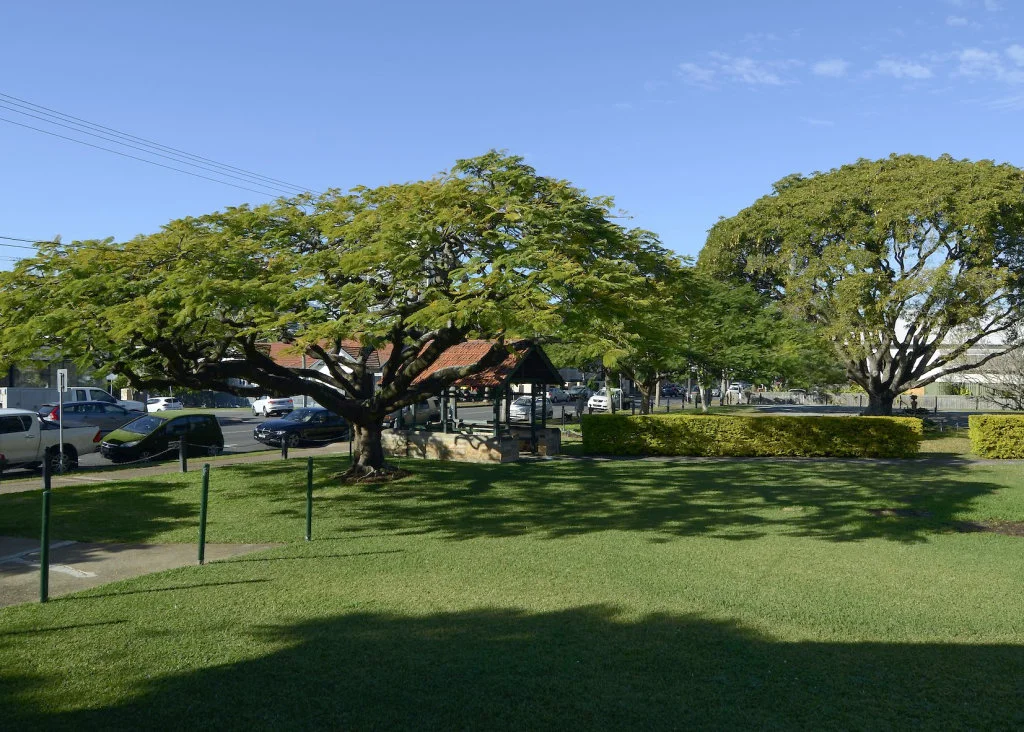
Our lawns
Permission granted for navy army airforce emblems to appear on public page of https://staugustineshamilton.au/
This web page is a copy – as designed by myself in 2026.
A Memorial Church
Our History
The Anglican Church of St Augustine’s Hamilton was built as a thank-offering to God for deliverance and peace, and as a War Memorial Church to the valour, sacrifice and endurance of Australian men and women who served in the Great War.
By the end of the hostilities, Australia had the highest casualty rate of the Allied Forces. Unable to lay loved ones to rest at home, Australians expressed their grief by erecting war memorials.
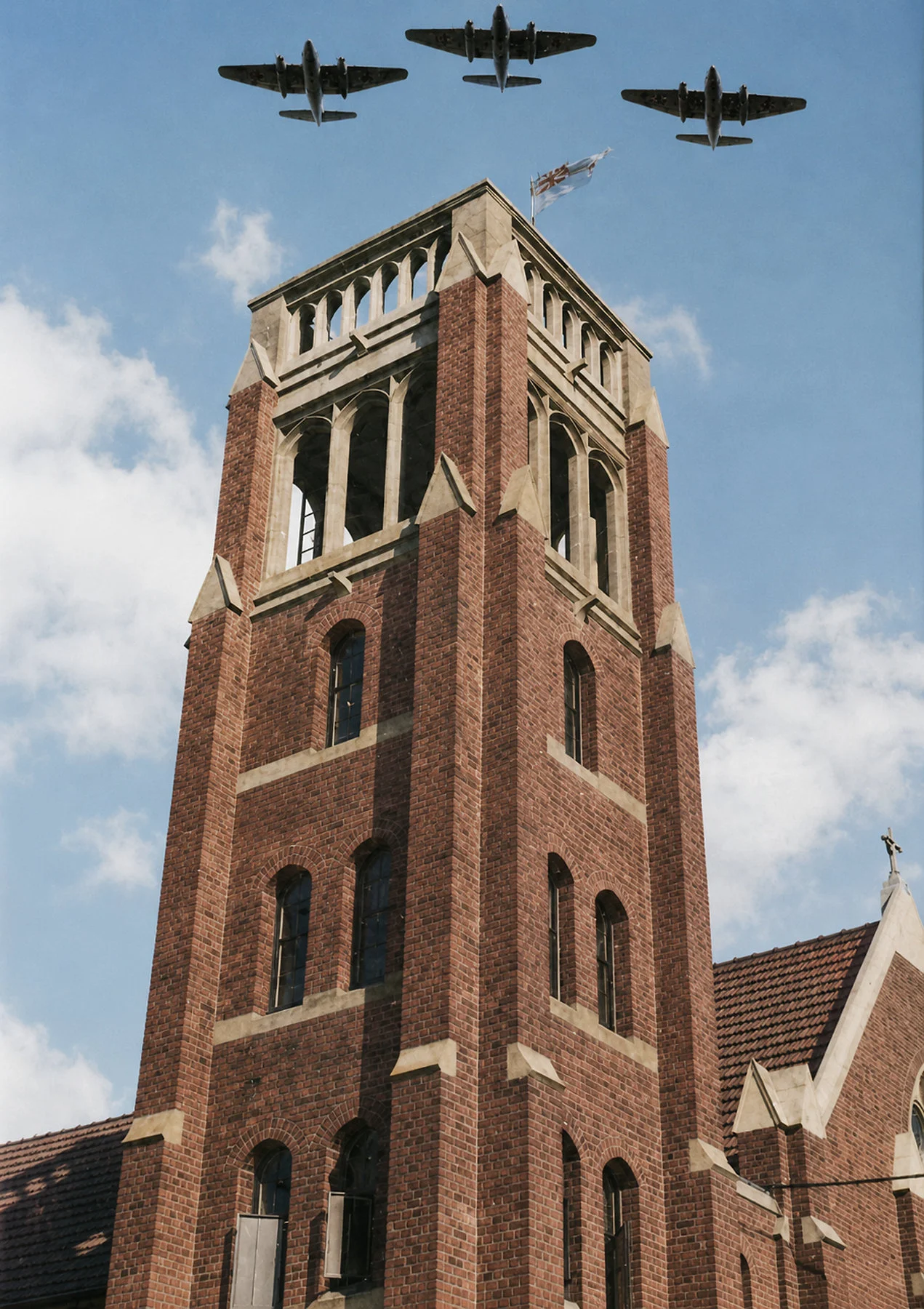
This beautiful church is an imposing two-story brick building set in leafy grounds on Racecourse Road, nick-named the ‘Jewel Box’ for its stunning stained-glass windows. After World War II a series of stained-glass windows were installed as a memorial to those who died in that war, including fifty-two parishioners. A prominent Queensland artist, William Bustard, designed the windows. The church is a war memorial commemorating both world wars. The tower was added to the church in 1961, dedicated to the men and women who served in World War II.
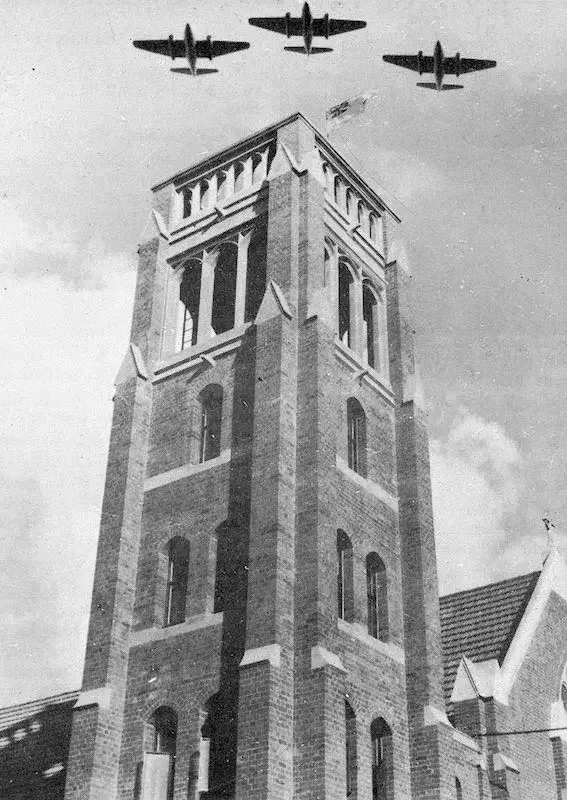
Different sections of the church represent different branches of the armed forces. The main body is a memorial to the Army, the organ loft to the Navy and the bell tower to the Air Force. In the area under the church is a Chapel, which is also a Columbarium. This chapel is open during the day for private prayer and reflection. Visit our office for any assistance required.
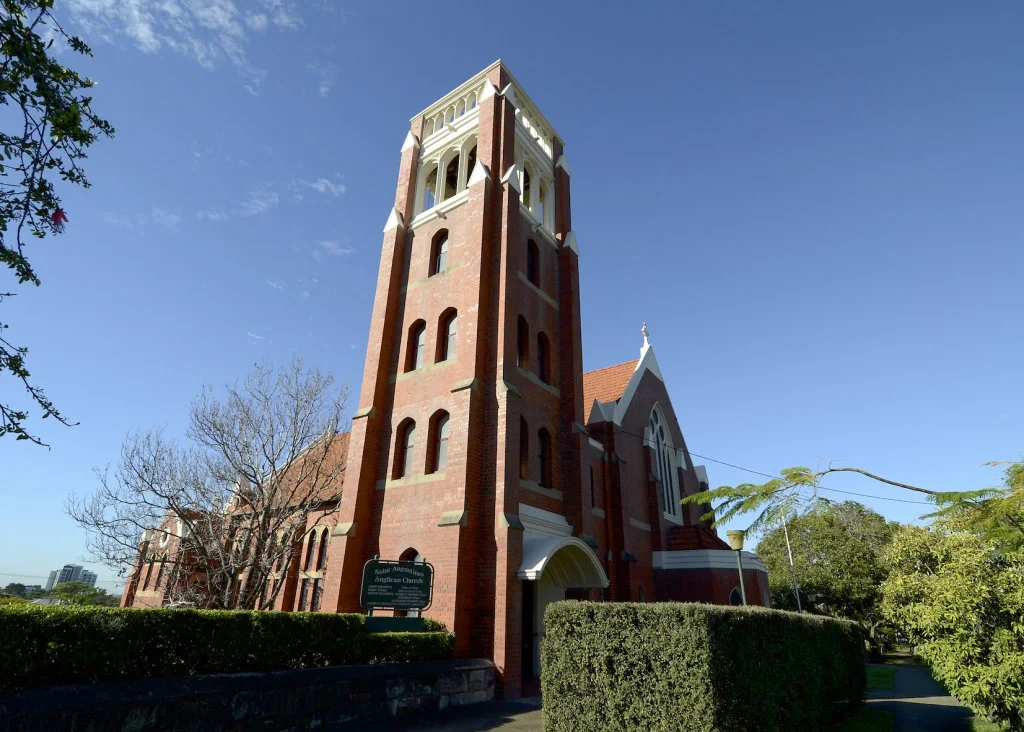
9 Charlton Street Entrance
The Tower Bell
The church bell is a prominent feature of the building and reminds us of war memorials. It is also used for the celebration of weddings.
When the church bell rings at the start of a service, we acknowledge a moment of silence as we join with churches around the country in a time of worship, giving thanks to God.
The Memorial Bell
It is believed the bell dates back to 320AD, that Emperor Constantine hung the bell in a Romanian Church. During the First World War, British soldiers buried it in the beach, then seen by Australian soldiers who dug it up and took it on to Captain Thomson’s ship. It was received by the Diocese of Brisbane and given to St Augustine’s in the 1920s. The bell was stolen in 1978, and later returned from the Brisbane courts in 2000.
The bell plaque reads, ‘The Eastern Church Bell, rescued by the Allies in 1918 from a ruined mosque, is here restored to Christian use in memory of the HEROIC DEAD, being the gift of Capt. and Mrs. W. Campbell Thomson’.
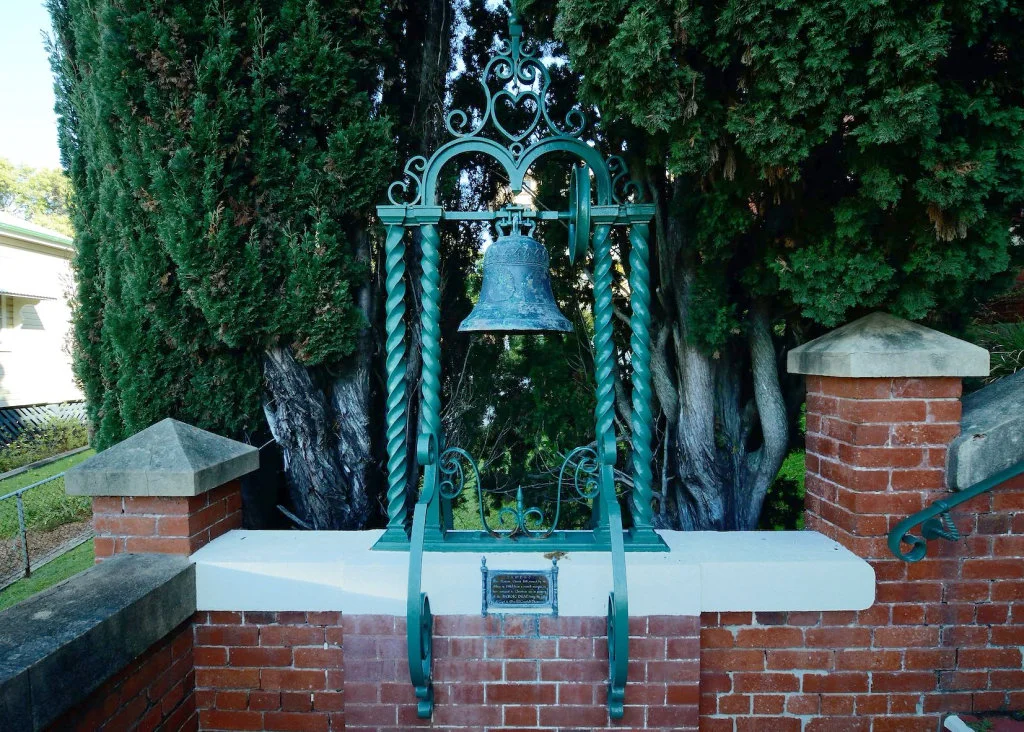
The original memorial bell
The Columbarium
Beneath the church is the Chapel of All Souls and Columbarium, a peaceful space for remembrance and prayer.
The Columbarium remains an important part of the church’s memorial life and is available for interment of ashes and memorial plaques.
Memorial Services
Memorial services are held n the 3rd Saturday of each month at 8am. Please see our Newsletter/Order of Service to confirm, or contaact our office staff.
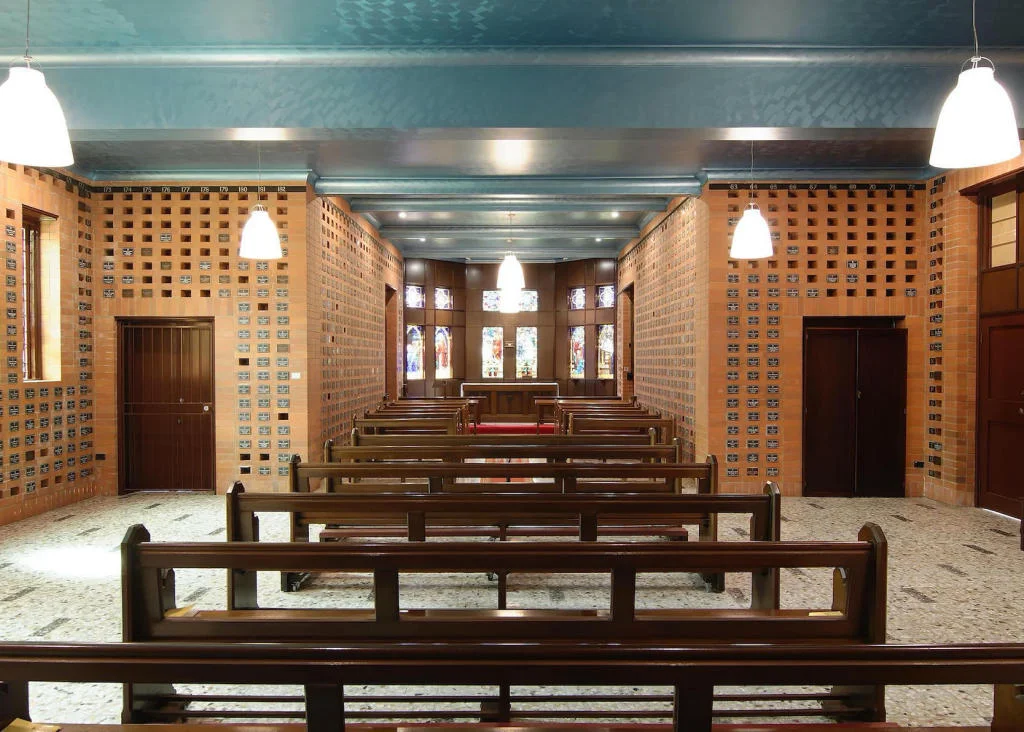
The Columbarium
Anzac Day Service
Lest We Forget
St Augustine’s is a War Memorial Church, one of the first to be built in Queensland. It is fitting that we commemorate ANZAC Day with a service in the church every ANZAC Day. All are welcome to attend. During the service, the names of those who have lost their lives are read out. There is opportunity to light a candle in memory of a family member or friend. Please see our Notices to confirm our service time.

Dear Friends,
The phrase “lest we forget” has become a call to remember our servicemen and servicewomen, and that is very appropriate.
However, we should remember too, when Rudyard Kipling wrote the poem ‘Recessional’ he was saying ‘lest we forget God’. This was first published in ‘The Times’ on July 17 1897.
Kipling was concerned about the boasting and imperialism that was sweeping England.
Here are five verses of the original poem. Every verse has a statement on excessive self-confidence and a call to remember the ‘Lord God of Hosts’.
Where did Kipling get his phrase from? In Deuteronomy 6:12 Moses warns the people, “lest we forget the Lord”. We may remember this as the familiar words are spoken in Anzac services, that God is remembered in these words.
1 God of our fathers, known of old,
Lord of our far-flung battle-line,
Beneath whose awful Hand we hold
Dominion over palm and pine –
Lest we forget – lest we forget!
2 The tumult and the shouting dies;
The Captains and the Kings depart:
Still stands Thine ancient sacrifice,
An humble and a contrite heart.
Lord God of Hosts, be with us yet,
Lest we forget – lest we forget!
3 Far-called, our navies melt away;
On dune and headland sinks the fire:
Lo, all our pomp of yesterday
Is one with Ninevah and Tyre!
Judge of the Nations, spare us yet,
Lest we forget – lest we forget!
4 If, drunk with sight of power, we loose
Wild tongues that have not Thee in awe,
Such boastings as the Gentiles use,
Or lesser breeds without the Law –
Lord God of Hosts, be with us yet,
Lest we forget – lest we forget!
5 For heathen heart that puts her trust
In reeking tube and iron shard,
All valiant dust that builds on dust,
And guarding calls not Thee to guard,
For frantic boast and foolish word –
Thy Mercy on Thy People, Lord!
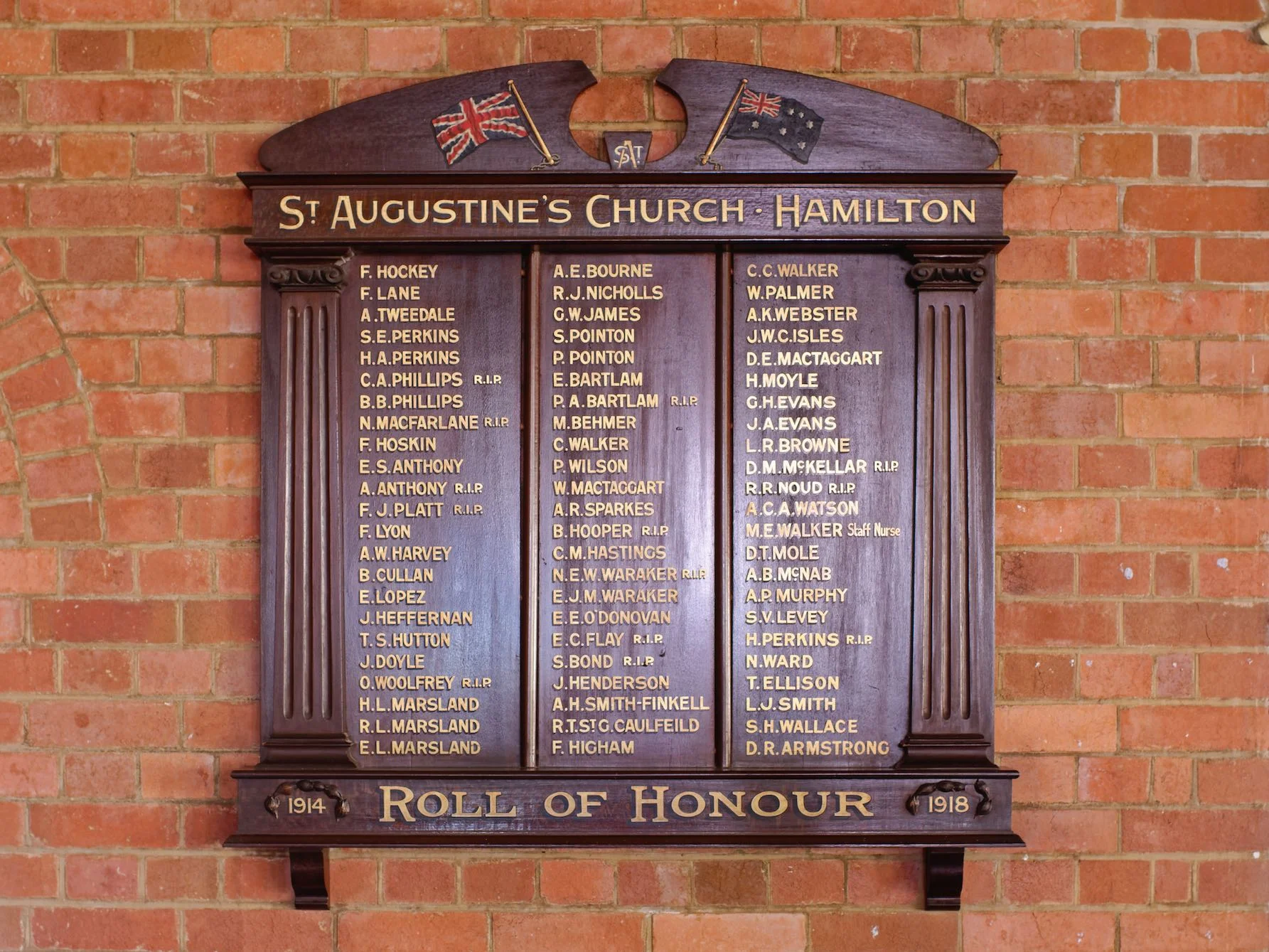

In memory of…
Augustine of Canterbury
Saint Augustine or Austin of Canterbury, our patron Saint, died at Centerbury about 605 A.D. In 596, Pope Gregory sent a band of 40 Monks, led by Augustine to preach the Gospel to the heathen English. They arrived in Keny in 597 and were well received by Ethelbert, the local king, who himself, soon became a Christian.
St Augustine became the first Archbishop of Canterbury.
“Hoping that this generation will be as faithful to Him as the past – and so receive God’s blessing”
Rev. W. D. C. Dunbar ( 1952 – Third Rector)
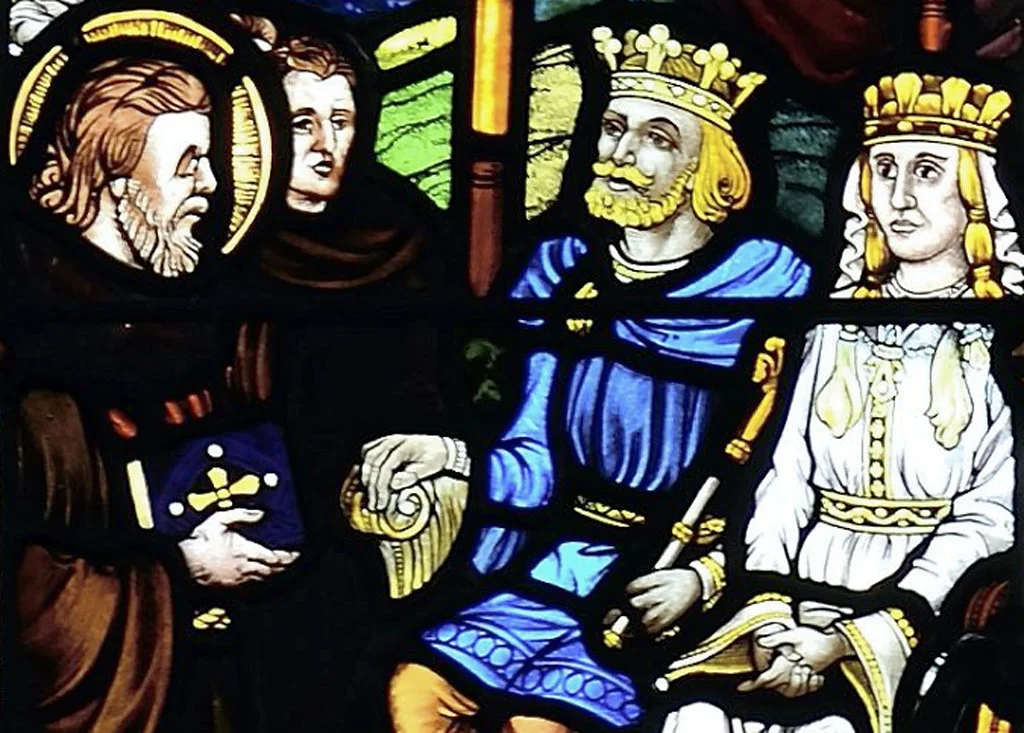
Before King & Queen Ethelbert, Isle of Thanet
Building History
‘CHURCH OF S. AUGUSTINE HAMILTON BRISBANE 1920 – 1970’
The following book is Copyright, and may be used by permission only.
Each section is approx. 40MB.
Document File
Download GuideToTheJewelBox_1920-2000_Part1.pdfDocument File
Download GuideToTheJewelBox_1920-2000_Part2.pdfDocument File
Download GuideToTheJewelBox_1920-2000_Part3.pdfDocument File
Download GuideToTheJewelBox_1920-2000_Part4.pdf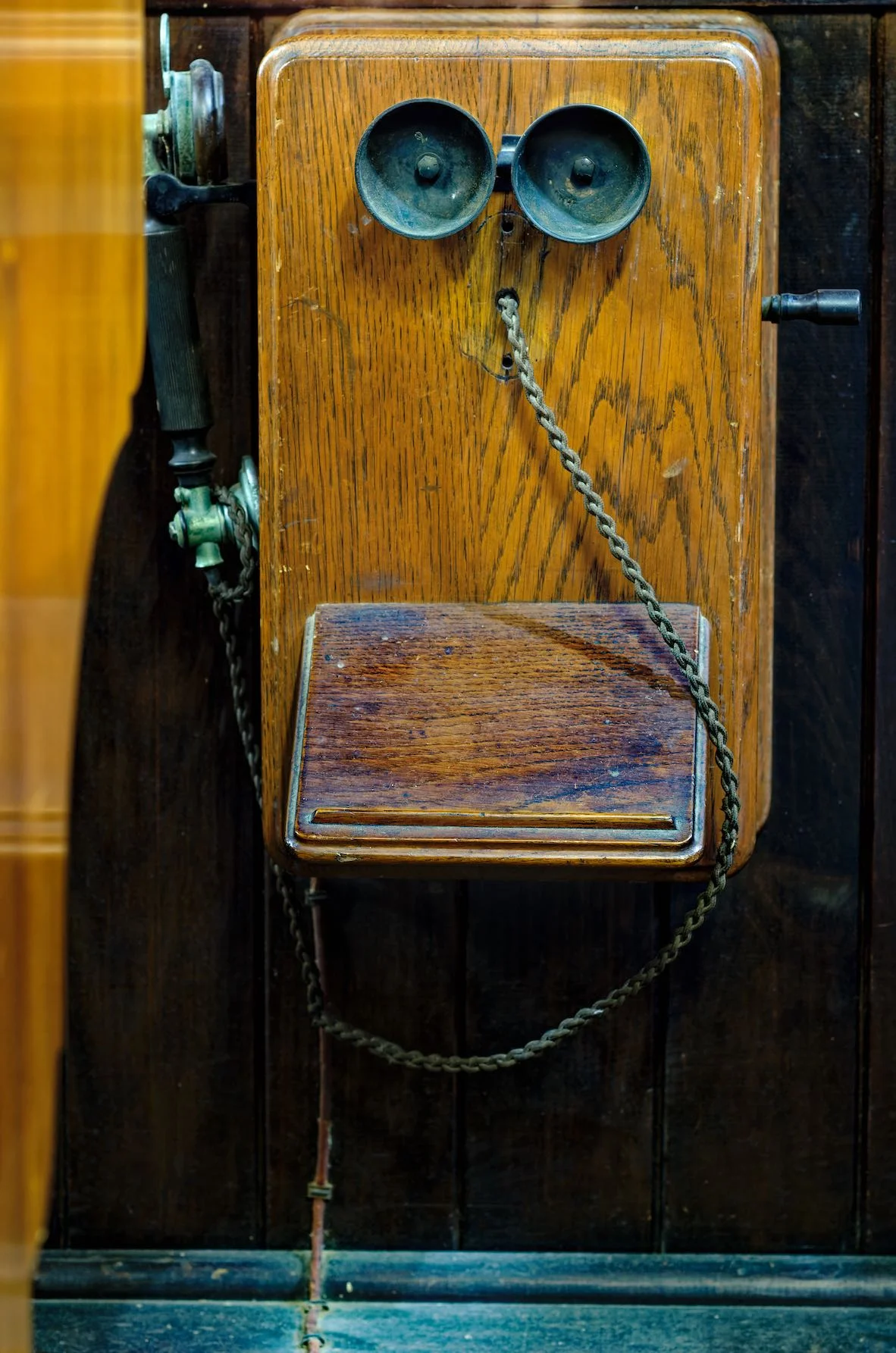
Organ loft internal telephone
Gallery
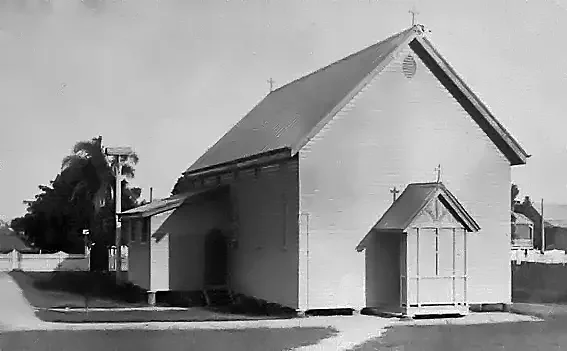
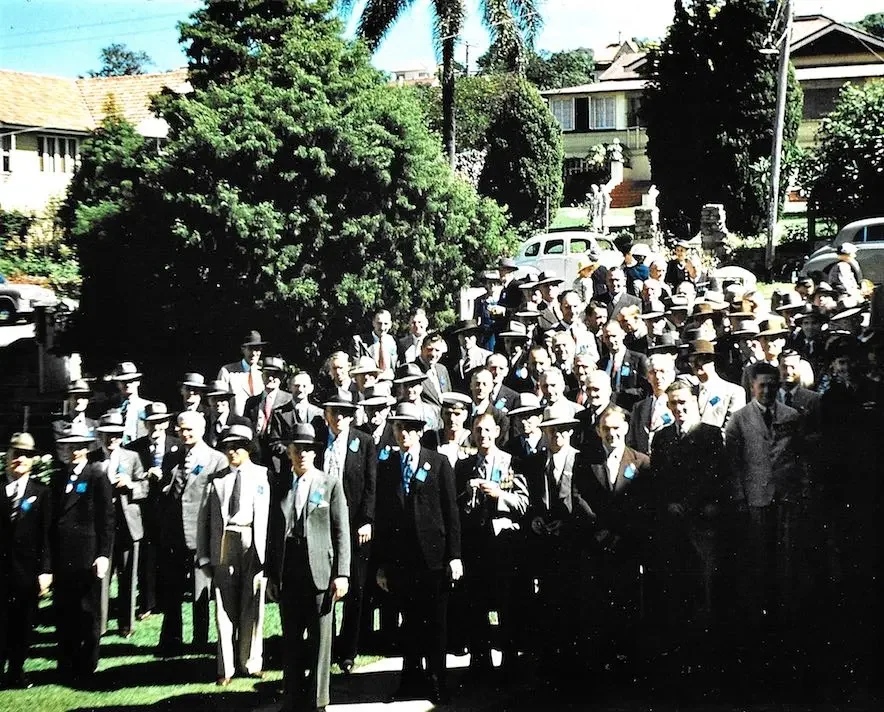
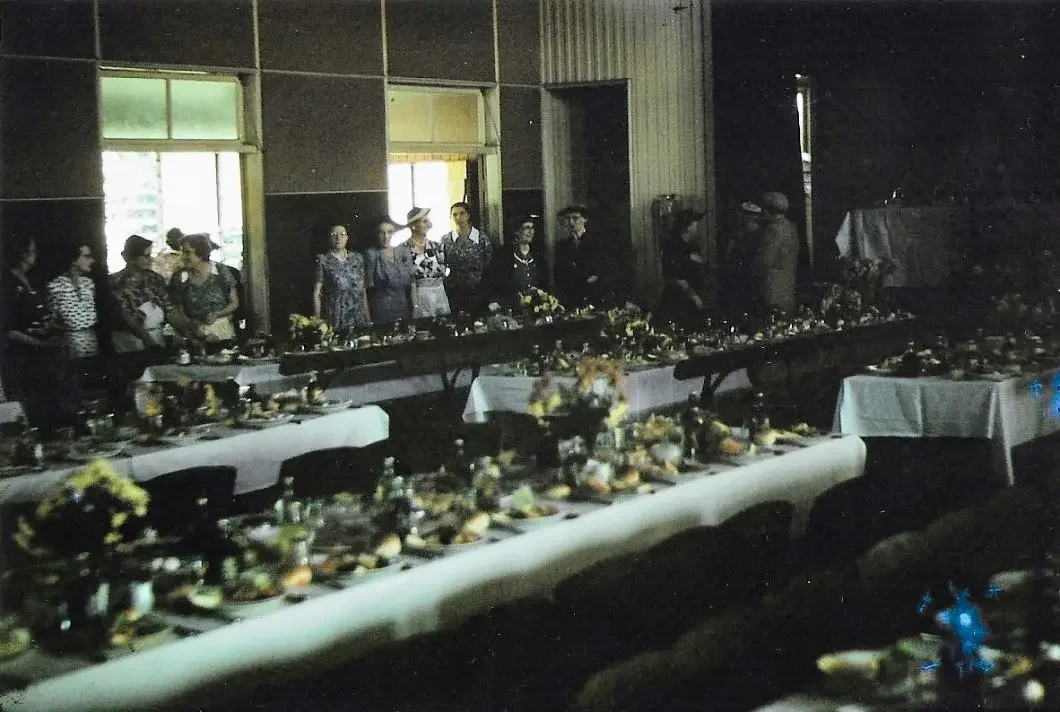
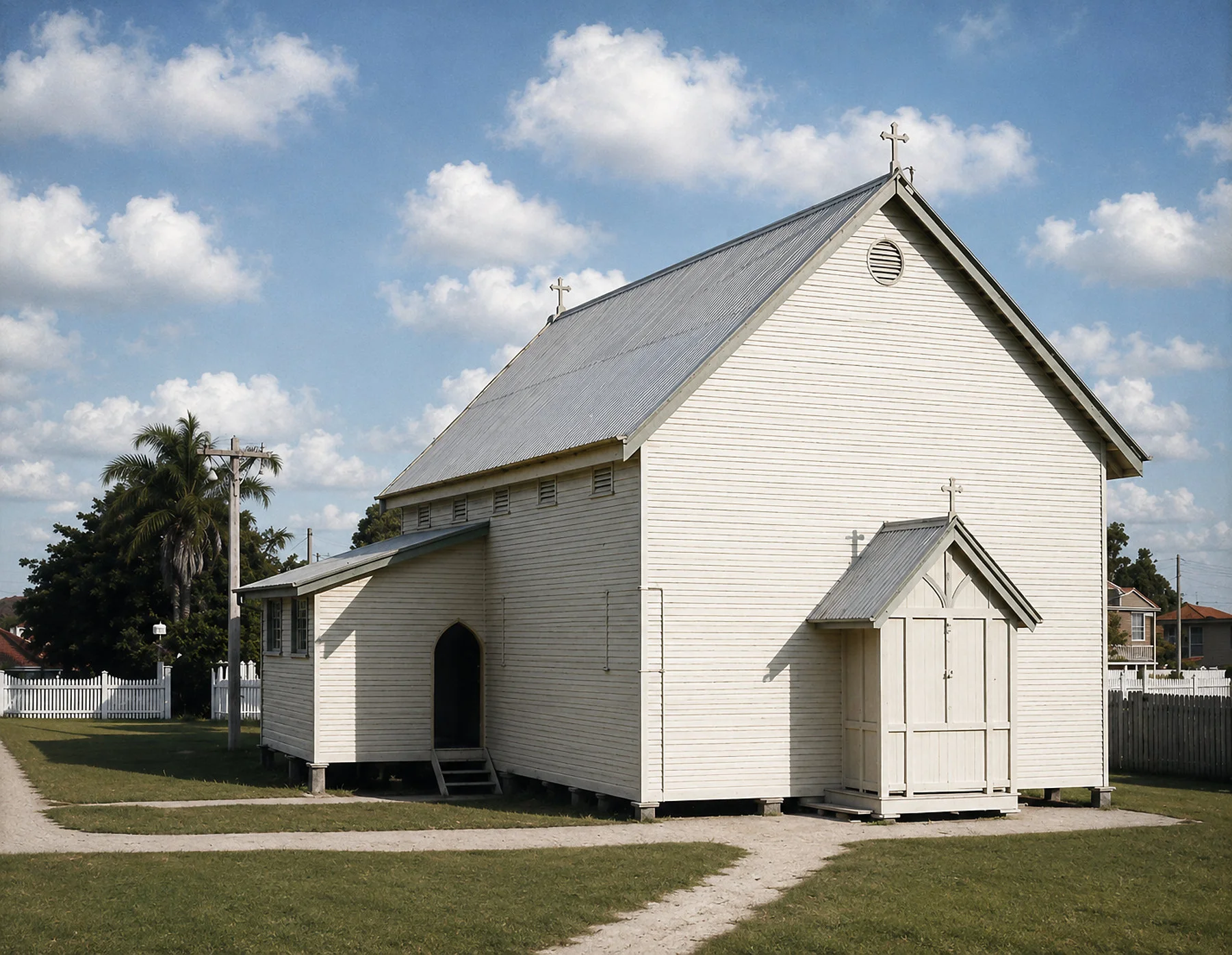
(1) The first St Augustine’s Church, Hamilton, in 1900.
Photograph from Anglican Diocese of Brisbane, Records and Archive Centre, HAMIS063-14.
(2) The pineapple farm
(3) Church & Rectory early 1920’s
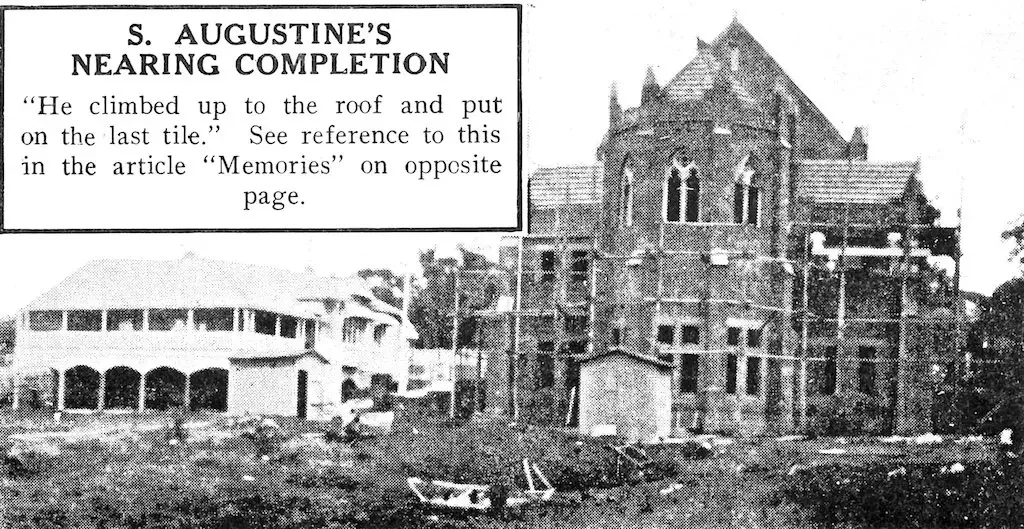
(4) Church near completion 1920
(5) RAAF Flyover 1960’s
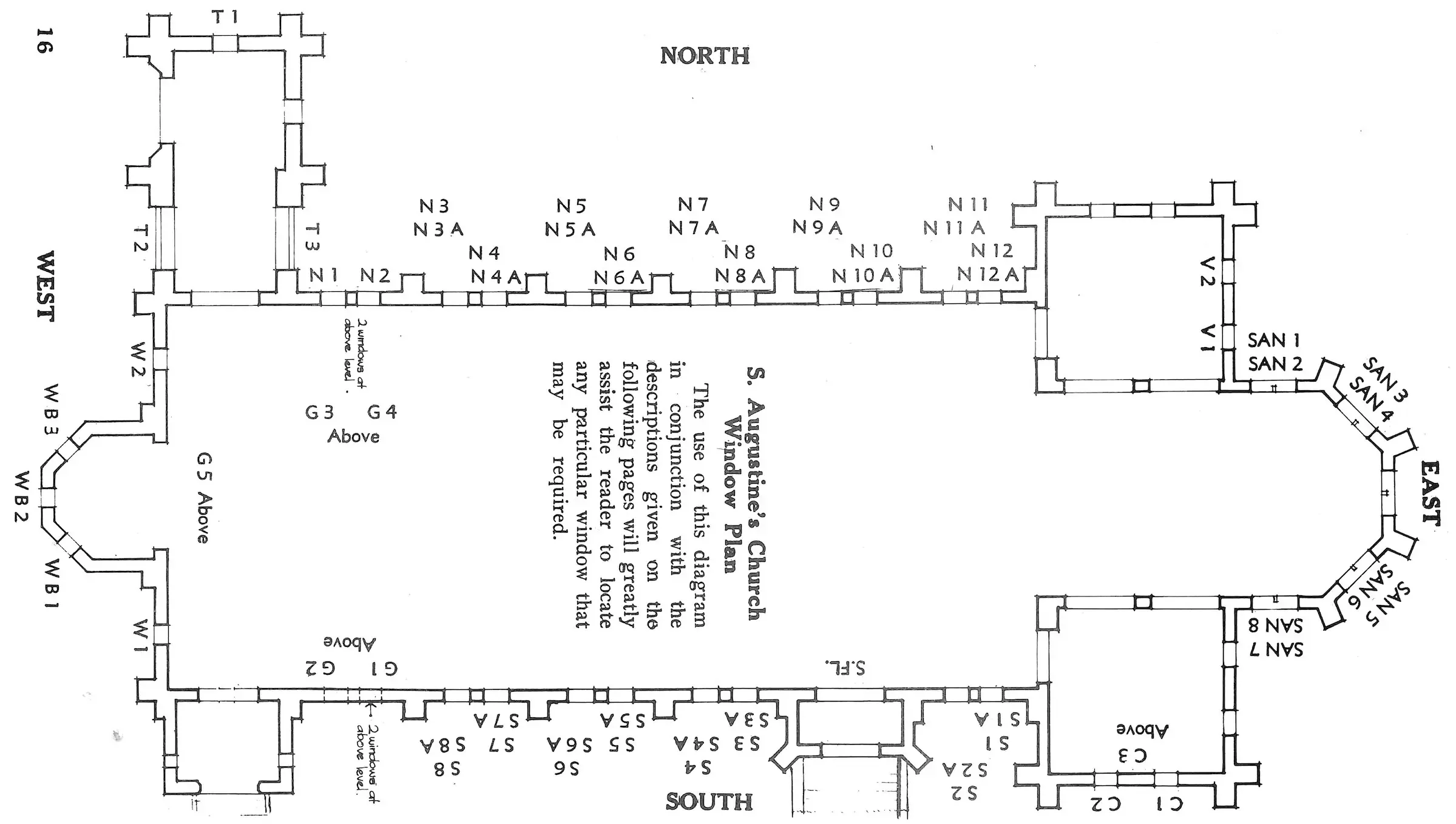
(6) Upper level window plan
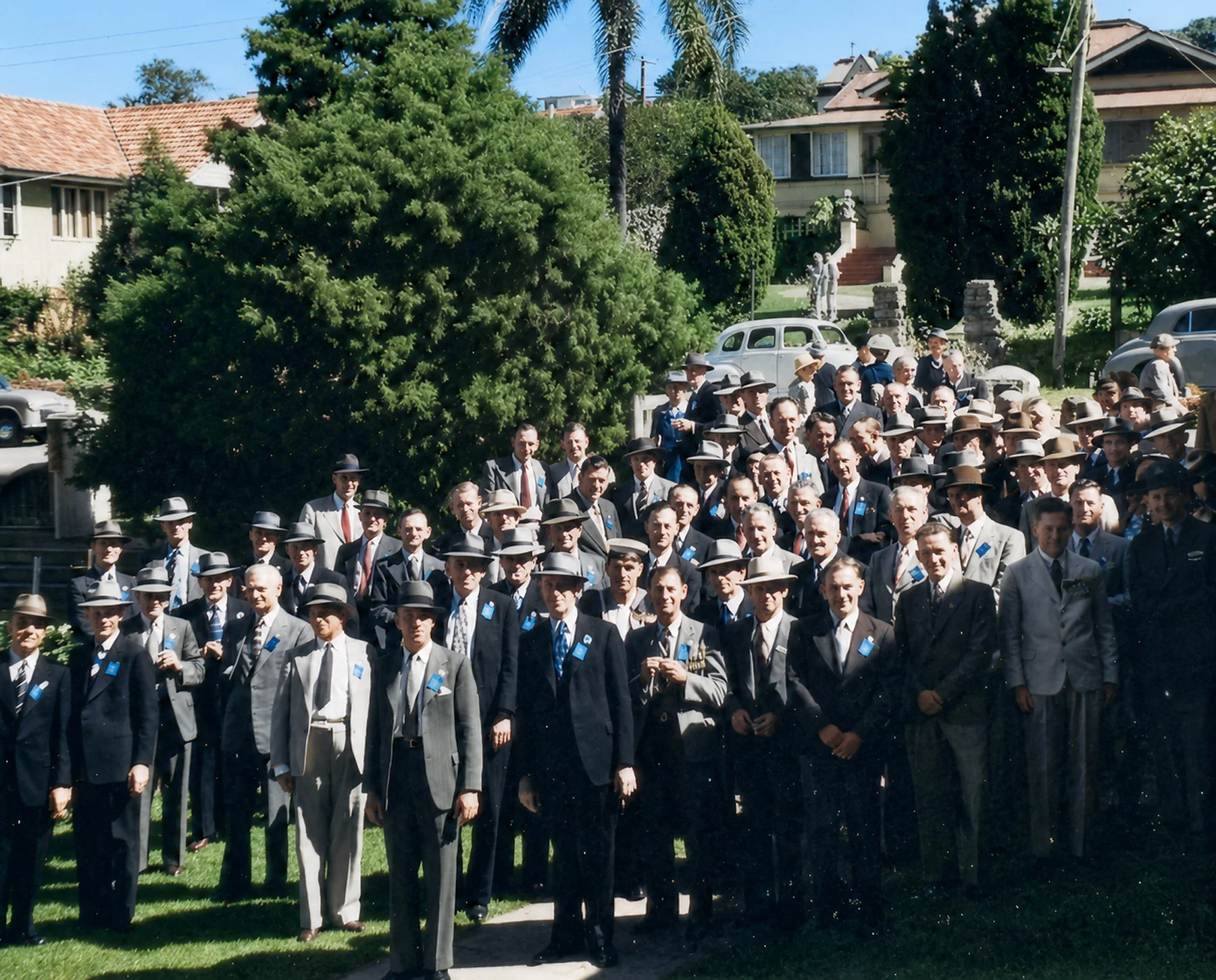
(7) Returned Servicemen – Australian Corps W.W.1. Church parade at St Augustine’s Church, Anzac Day 1952. Photo by Harold A Gates.
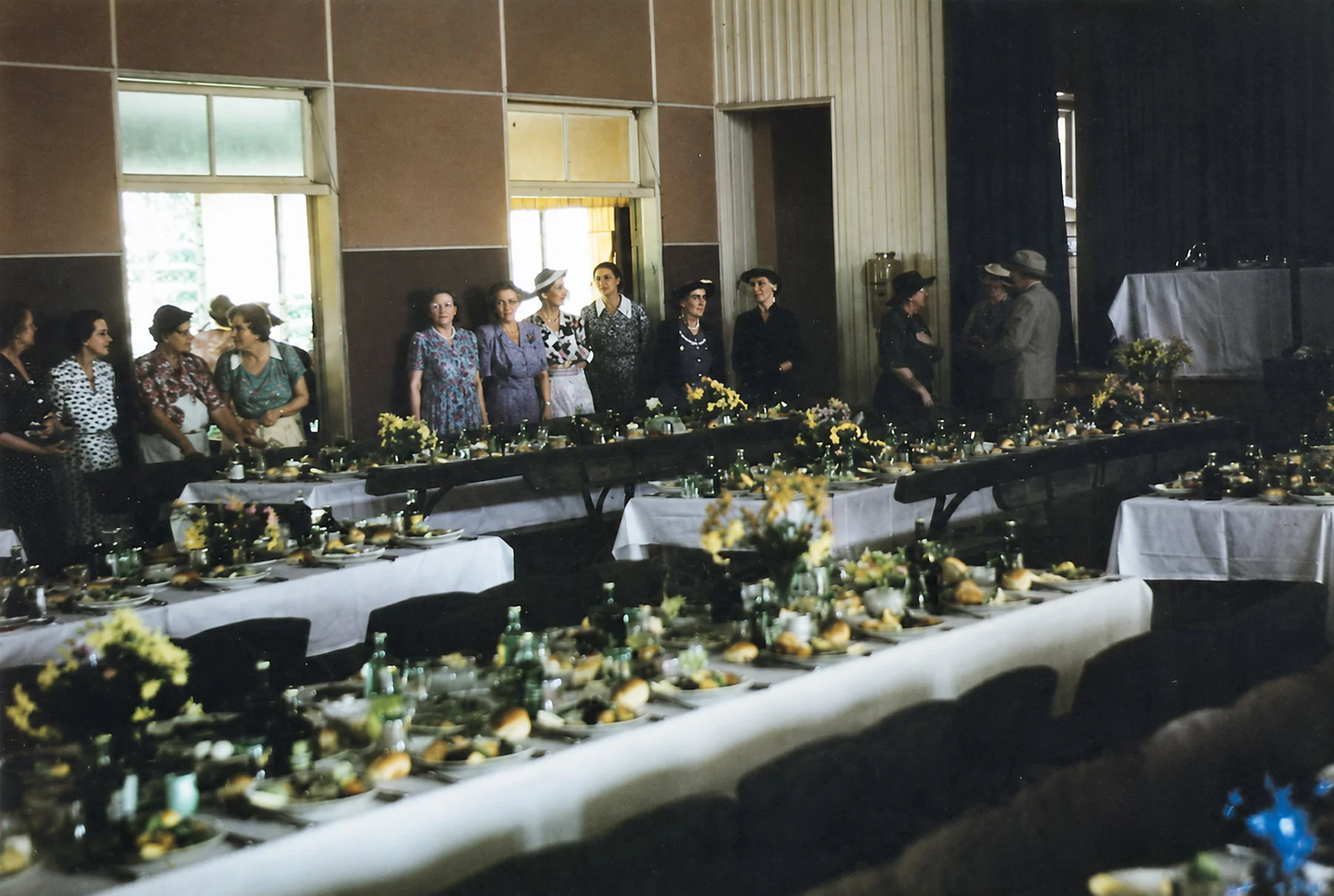
(8) Luncheon St Augustine’s Anzac Day 1952. Photo by Harold A Gates.
AI Colour Revisions
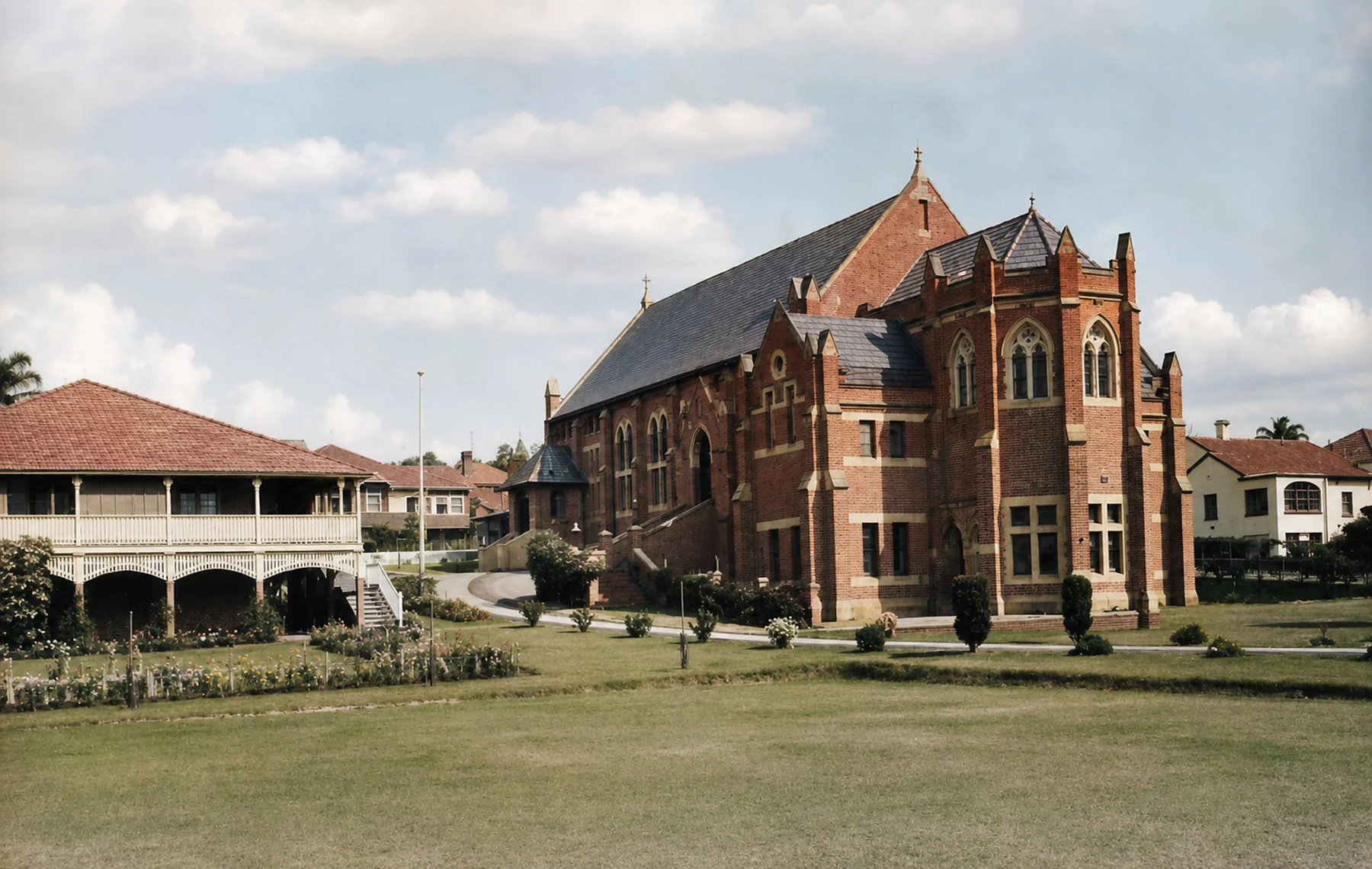
East Wall: The Sanctuary | SAN windows (facing Racecourse Road)
South: Our (or The) Lady Chapel | C Windows
South Wall: S Windows including SFL Fanlight (Adoration of Magi) Window
Below Church : Columbarium – All Souls Chapel (not shown above) | COL Windows
West: West side of Church with Baptistry | W Windows
West Tower (Above with bell) : T Windows
West Above: Gallery | G Windows & Te Deum Windows | Pipe Organ
North Wall: N Windows
North: Vestry | V Windows