

Project Description
Rare Recordings of Canon Jim Glennon
These are a collection of historical CD recordings from St Andrew’s Cathedral’s Golden Grove HMS Office, not in circulation since the early 2010’s.
Review the history of Golden Grove for more information. The Healing Ministry – founded in 1961. Recordings vary from St Andrew’s to St Mary’s.
Content Advice – These recordings are presented as archival material and are not meant for your counseling or instruction. See your own sources for the same. Please keep in mind that evidential faith is different in approach to unbalanced thinking or actions based for example on enthusiasm or lack of experience and contextualisation.
2026-06-21 70.89 MBfile: cd1.mp3 2026-06-21 25.79 MB
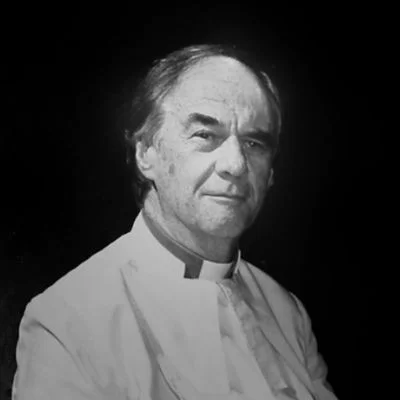
Under the ministry and leadership of Canon Jim Glennon, the Healing Ministry at St Andrew’s Anglican Cathedral, Sydney, commenced September 1960 and continues today.
His e-book, “Healing Is A Way of Life – Practical Steps to Healing” is available on the web.
Most of the recorded sermons from the Cathedral or St Mary’s Anglican Waverley are unavailable to the public. The recordings presented here are from my collection provided by the late Dorothy Bird who managed these historic recordings.
The ministry of Canon Glennon has had very significant impact on people’s lives, even until today from those who attended or just visited the services. You will notice the English accent and the way people spoke authoritatively or with demand back then.
People who read portions of his work, or listened to parts of his recordings have readily misunderstood the teachings and contexts. For example, you do not have enough faith; if you are not healed, it means you did not have faith; or other side-effects like, “You must have really sinned badly for God to have done this to you”, or “Don’t pray after one year maximum if you are not healed.”
This mis-positioning has harmed people. Miracles do not harm if they are genuine and in verified testimony. The ministry has a verified account with subsequent follow up by the ABC media of a person who was died in a service and who came back to life. (The congregation is large enough in the Cathedral to have doctors present.)
Another misunderstanding is regarding his work in New York visiting David Wilkerson. Glennon was not saying to dismiss drug addicts straight out, but a personality with a distinct and final positioning that refuses to try, to even look at faith, who continues to only say they have the problem, these are the ones people could not work with for their recovery. The misunderstanding is to say someone who mentions a problem is to be refused ministry, which is not what was happening in New York.
Glennon perhaps represents one of the best mentors in the Australian church, regarding healing. He was strong in teaching about people being in fellowship with each other, and the subsequent healing accounts being evident by comparison to people not sharing their lives in this Christian way. Sydney is a unique setting that is not “replicated” elsewhere and has changed over time as people review history and what Church services mean today.
Some of the CD content has poor audio quality.
Later in life, Canon Glennon was fed up with the behaviour of various people in the Church.
Canon Glennon struggled with his own health, and met with Agnes Sandford for prayer. This experience changed his ministry. He had an extended vision of Christ on the Cross, and how terrible the imagery of that suffering was, before his ministry took form.
Here is a transcript of one sermon on the origins of the Healing Ministry:
Faith and healing through fellowship
Last week I was talking about my prayer relationship with the former Archbishop of Canterbury, Lord Carey. I began with a story about Stephen Webster the rector of Dundee (?) who had cancer in a lethal form, malignant tumour in his brain, and God said to him, “Stop saying how sick you are by sight. Start saying how well you are by faith.”
From thereon, and with his wife, that’s all he affirmed – “How well I am by faith.” Every day he said he was marginally better over the previous day. He went to a doctor who said how sick he was, and then he became confused. He was trying to affirm them both, and it doesn’t work like that.
That is a profound story. It is very simple. It is absolutely essential. Today I am going to tell you something of how you can do that. Begin saying how well you are by faith.
When the healing ministry began, in St. Andrew’s Cathedral in the last Wednesday in September 1960, apart from the persecution I suffered, the first observation I made as a result of what happened by doing that, was that people drew upon more healing. The reality of it as a result of being in fellowship, some who were sick, some were well. So much so, that Boxing Day December 26th, to the end of January, the group I had was about 25 people, took over an ideal country place. With a chef, the healing ministry people made it work.
People came for a short or longer time as they were able to. It was so successful, we went there for 11 years. Then we had nothing for several years. While I knew that people drew on more healing while in fellowship that when in an hour at 6 o’clock each week, I didn’t know why. I could guess. But I never knew why. When we stopped going after 11 years, one of the families set up a place in Collaroy, and my mother would go from Randwick, just to have two or three hours in fellowship. It was popular and greatly used.
We got to a frustration point after those several years, and people in the healing ministry committee started to say, “We should be looking for a place in the city.”
A man in the committee was John Davis, an architect. John was a “doer”. Next week he approaches a Roman Catholic reality agent, who says “I’ve got the place for you. It’s coming on the market today, a Roman Catholic convent school in Newtown.”
John said, “Take me to it.”
John called me on the phone. I called up our other leaders, [treasurer, solicitor] and we met at the centre. I always remember them saying, this is going to be like the country place, but in the city. I was instantly converted to its desirability.
They wanted $850,000 walk in, walk out. It was very run down. I realised I needed advice. Someone once said, if you want advice, go to the top. I said, I know, I’ll go to the Governor of the Reserve Bank, Sir Harold Knight, a member of the Cathedral Chapter. I rang him up on the phone.
“Sir Harold. It’s Jim Glennon from the Cathedral. The Healing Ministry wants to buy a property at Newtown. I don’t know how to go about it. Would you advise me.”
He said, “All right.”
He dropped everything. He stopped being the chief economist of the Commonwealth and came out to Newtown. I saw him there within an hour.
He said, “You’re taking a big bite of the cherry.”
I said, “Yes I know.”
When he saw I was serious, he said, “Where can we go, to have a council of war.”
“Let’s go to the Cathedral.”
He said to me, “I want you to see Neil Cameron. He is the leading lawyer in the town and get his advice.” He too is on the Cathedral Chapter.
I called him on the spot, Monday morning saying I was with Sir Harold Knight. I saw him on Tuesday. He was generally approving of what we were wanting to do and offered to help. He said, “Next person you see is the Archbishop Robinson. And if he wants, he will then see me as the lawyer.”
I saw Archbishop Robinson on Wednesday and he was generally supportive.
Next Thursday there was a big meeting in the Dean’s office, with the Archbishop, the Dean, and the Chapter Executive, and Neil was there if needed. Neil saw things were going smoothly, so he left.
The Executive said to me, “You can exchange contracts with the intention of buying the property if you’ve got two thirds of the money of the purchase price, given or pledged by the time you exchange contracts.”
There was about a month’s grace.
The second thing they said was, “It would not be owned by the church. You will form a company.”
We had to go through that procedure.
So, it became what is called in church language, an Independent Anglican Work.
It is not owned by the church. It is like the Church Missionary Society or the Bush Aid Society.
It was called The Healing Centre Golden Grove Limited.
On Friday we put down what money we had saved, about $20,000, and got a receipt.
On Saturday, all hell broke loose in the Roman Catholic Church, (I apologise, that’s not the right word to use). They went to our Cardinal Gilroy to change it, but, they had our money. We had their receipt. We had a month to exchange contracts or we’d lose our deposit.
When we came to the end of January, there was the Wednesday night healing service. Thursday the Chapter met, and Friday we had to exchange contracts. We didn’t have a day after that.
We asked our people to bring money or a pledge form, which we had distributed, and bring it in to the ballot boxes that I had borrowed from the Synod, on the Wednesday night. And they did that. When we counted up the pledge forms and money, mainly pledge forms, we were $130,000 short of the two thirds that we had to have. That was that.
Then I saw one of our men bringing on one of the ballot boxes from the vestry. I said to my secretary to see if anyone had put in a pledge form on the way out of the Cathedral. And she brought back a pile of pledge forms. We counted, and they came to exactly $130,000. Not one dollar more, nor less. So, we knew, God was in it.
The Chapter approved of our activity the next day, and we signed contracts on Friday. People just gave the money. We bought it and asked for $100,000 more money for renovation, and they gave $120,000. So, we raised $970,000. That’s 20 years ago. By direct giving, just like that.
Anyway, that was another story. Praise God.
The point I am trying to make is, we always found the reality of fellowship to be the way for people to draw on healing. But I never knew why.
But I learnt from Canon Stanley Giltrap, who had migrated from Ireland to South Africa with his family, in the East Africa Revival Fellowship, who was one of my colleagues in the Cathedral Healing Ministry, who said, “In the East Africa Revival Fellowship they have a signal text, the words from 1 John 1:7, ‘If we walk in the light as He is in the light, we have fellowship one with the other. And the blood of Jesus Christ cleanses us from all sin’.”
He said, “That is what governs the activity of the revival fellowship. If we walk in the light as Jesus is in the light, we have fellowship one with the other and as a result, the blood of Jesus cleanses us from all sin.”
He said the scripture is interpreted like this. It means if you belong to the fellowship, you walk in the light as he is in the light, if the blood of Jesus Christ is to cleanse and remove the sin, not forgive, remove, you must have fellowship with one another. He said if you are in the revival fellowship, you must have fellowship with others in the fellowship, every day.
It’s not just saying, Oh, I am part of the fellowship. You are to have fellowship. That is the secret. Because without realising it, we were having fellowship. And because that Spirit was stirred up, people cleansed, and healing followed.
It was one of the most important things I ever learnt. I never forgot it.
If we are going to stop saying how sick we are by sight, getting back to my earlier story, and start saying, and only say how well we are by faith, which you have to do if you are going to be healed, one of the ways forward is to put into operation 1 John 1:7. It means we have to have active fellowship with one another every day. It’s part of your life.
Now you might not be able to see someone, but most people have got a telephone. You could organise it if you have to. And that’s what we have to do.
This church is very good with the fellowship. That’s why we have a time of prayer on Monday, Tuesday, and Friday, again, to provide daily fellowship.
If you do that, you’ll find the Spirit is stirred up, so you Can say, how well I am by faith and overcome the other tendency to say how sick I am by sight. There you have it. We ought to be talking about how we can put into operation that beautiful text of 1 John 1:7, and not have fellowship just on Sunday. Let us realise, it is in the fellowship the Spirit is stirred up.
There is nothing in the New Testament about the Christian who goes it alone. It is unknown. We are the Body of Christ, and members in particular.
It is not up to someone else to provide the fellowship. It is up to me! to provide fellowship. It’s up to you as far as you’re concerned. Create it.
My point is, in the long run, other people haven’t got my problem. They are relatively objective and can help me because of the Christian fellowship. That is an important aspect of the Healing Ministry. That is what we mean by the laying on of hands. Outside, and relatively objective faith, is being added to inside, and relatively subjective faith.
It’s got to be there day by day by day.
Get that right, then the mountain is moved. Then the mountain is moved. Then the mountain is moved. And it helps the individual and it helps me to have faith for my situation, because other people are having faith with me and for me. That enables me to believe, and rise up against my presenting circumstances. It’s what you’ve got to do.
If you only say, “Oh dear me. Oh, dear me.” you won’t make any progress. You’ve go to start saying, “Praise the Lord. Praise the Lord. Praise the Lord.”
If you can’t do it yourself, you need to have fellowship. And day by day. That is the way forward.
I believe this is very central, very simple. This is something we need to develop as far as we are concerned, that the fellowship is on a day-by-day basis. And we accept the responsibility for ourselves as well as others.
The telephone… I often have telephone fellowship with people. I’m going to ring up three people today. And, visiting. Making the opportunity. Then you will find the Spirit is stirred up and you will be able to say how well I am by faith, and enabled to do that in an ongoing way. Not how sick I am by sight which doesn’t help you anyway.
I hope you find this very important. We’ve got to develop it. It’s up to me. It’s up to you. It’s the way forward.
Let’s have a prayer.
“Father we believe for your blessing in our fellowship. Father, we would walk in the light, as Jesus is in the light. And because of that, have an active, developing, effective, growing fellowship with one another – day, by day, by day, by day. “
And as a result of that, find the blood of Jesus Christ, removes sin. The Spirit is stirred up. Healing takes place. People are converted. We go from strength to strength.
Let’s say together, “Thank you Father. Thank you Jesus. Thank you Holy Spirit”, together.
[Congregation says, “Thank you Father. Thank you Jesus. Thank you Holy Spirit”.]Amen
Canon Jim Glennon was well known for saying not to look at the problem. Turn 180 degrees to look to God. This approach came from several sources, not just from his visit to New York concerning David Wilkerson’s ministry and addictions, but others like the Evangelical Sisterhood of Mary in West Germany and so on. If we focus on the problem, we may do that at first, but need to get off that approach quickly.
Canon Glennon was ill for many years. He was frustrated at his lack of relationship he felt he was supposed to have with the Holy Spirit. He met Agnes Sanford who prayed with him a number of times. Glennon received an outpouring of the Holy Spirit as an anointing for the healing ministry to follow. He was well aware that some healing takes longer periods of time but if we drag ourselves back into negatively focusing on the problem, we don’t heal. We focus on the reality of faith itself, despite what we observe physically. This enables faith but we are not imbalanced about it.
I personally recall a man who felt castigated by Glennon for missing his healing, which stayed with him into at least his eighties. By then it was hard to help him understand he did not need to carry this improper burden.
Canon Glennon had a distinctive style, in part due to the Sydney and Church background he grew up in, and the way people spoke at that time.
“YOUV’E GOT TO! YOU’VE GOT TO! BELIEVE! IT’S THAT SIMPLE.”
Canon Glennon had ongoing frustration and difficulties with a number of people. His “audience” decreased over time as others wished to focus on their ministry and not his.
Yet, Glennon is the man who brought many into healing, who has the legacy of virtually non-interrupted services in the Cathedral each Wednesday evening, and the procurement of the Golden Grove building and grounds in Newtown.
The Healing Ministry was not exactly how Canon Glennon envisaged it over time.
I never met Canon Glennon but I have met many who knew him from the 1960’s onward.
Today, healing is taught in the Cathedral as more than physical. It may be forgiveness, emotional, memories, current situations, financials and more. The ministry does not advertise its miracles.
CD 8 Part 1
Reflections on the Holy Spirit, Christian Experience, and Church Teaching
One of the enduring areas of disagreement among mainstream Christian churches concerns the baptism, receiving, and filling of the Holy Spirit. While there are broad areas of agreement between various traditions, there are also significant differences, some of which are strongly held.
In the recording of CD 8 Part 1, Canon Jim Glennon begins by presenting his understanding and experience of these matters. However, by the end of the discussion he acknowledges the complexity of the subject, describing the situation as something of a “mess” and recognising that no individual or tradition has every aspect completely correct. He speaks primarily from his own experience while acknowledging the existence of differing views.
My interest is not primarily in defending a particular theological system but in understanding the normal presence and activity of the Holy Spirit as described in the New Testament. Throughout Acts and the ministry of the apostles, the Holy Spirit appears as an active and guiding presence. Peter, Paul, Barnabas, and others ministered under the Spirit’s direction, and signs, wonders, guidance, and spiritual empowerment are presented as normal features of the Church’s life and mission. The New Testament also distinguishes between the Spirit’s work in individual believers and the Spirit’s work through ministries established for the benefit of the wider Church.
A recurring problem arises when one particular interpretation becomes the standard by which all Christians are judged. Some Christians describe conversion to Christ and a later, distinct experience of receiving or being filled with the Holy Spirit. In this understanding, conversion is genuine and transformative, involving true faith and spiritual rebirth, while a subsequent experience brings a new awareness of the Spirit’s presence and power.
Others maintain that conversion and the reception of the Holy Spirit are inseparable realities. In this view, every believer receives the Holy Spirit upon genuine conversion, even though there may be later experiences of spiritual renewal, growth, empowerment, or filling.
The difficulty arises when either position is turned into an absolute measure of another person’s spiritual condition. Christians have often been hurt by being told they have not truly received the Holy Spirit because their experience does not fit a particular model. Yet despite disagreements over definitions and timing, many believers recognise clear evidence of the Spirit’s work in transformed lives, growing holiness, effective ministry, spiritual gifts, and a deeper love for Christ.
A further aspect concerns ministry itself. The New Testament consistently portrays ministry as dependent upon the power and enabling of the Holy Spirit. Ministry that relies solely upon organisation, structure, or human effort risks becoming spiritually ineffective. The work of the Church was never intended to be sustained merely by institutional strength but by the living presence and activity of God’s Spirit.
There is, however, an opposite danger. Some churches minimise or avoid teaching about receiving, being filled with, or being led by the Holy Spirit. Where the Spirit’s direct activity is neglected, alternative emphases can emerge. In some cases, authority structures, traditions, or institutional processes may take on a role that effectively replaces personal dependence upon the Spirit. At its most extreme, this can result in the belief that divine guidance is reserved primarily for those in positions of authority, while ordinary believers are expected merely to receive and obey.
Both extremes can be harmful. The first places human definitions of spiritual experience above the reality of God’s work in a person’s life. The second diminishes the New Testament expectation that all believers may know, be led by, and be empowered by the Holy Spirit. The challenge for the Church is to remain faithful to Scripture while maintaining humility about matters on which sincere Christians have long disagreed.
The historical reality is that Christians have wrestled with these questions for generations. Yet amidst the disagreements, one consistent theme remains: wherever the Holy Spirit is genuinely at work, lives are changed, Christ is exalted, and the Church is strengthened for its mission.
While Christians may disagree profoundly about how the Spirit is received, when the Spirit is received, or what terminology should be used, they often recognise the Spirit’s work retrospectively through the fruits and effects in a person’s life. That may be one of the reasons why this discussion has remained unresolved for so long: experience and doctrine do not always fit neatly into a single explanatory framework.
To summarise my concerns
There seem to be distinct concerns I have woven together:
- What does the New Testament actually describe concerning the Holy Spirit?
- How have different churches interpreted those descriptions?
- What damage is done when one group absolutises its interpretation and judges others by it?
- In Acts, there does appear to be a variety of patterns regarding the Holy Spirit. Sometimes the Spirit is received immediately upon conversion, sometimes through the laying on of hands, sometimes in ways that appear subsequent to conversion. This variety is one reason different traditions can all find support for their positions.
- The New Testament consistently presents the Holy Spirit as active, personal, and involved in the life and ministry of believers and the Church.
- Problems often arise when a particular experience is elevated into a universal test by which all Christians must be measured.
- The opposite problem also exists: churches can become so cautious about claims regarding the Holy Spirit that they effectively cease teaching expectancy regarding the Spirit’s ongoing work.
- The New Testament seems concerned less with defending systems and more with demonstrating a living relationship with God through the Spirit, evidenced by transformed lives, ministry, guidance, and witness.
Here we are not arguing for a particular Pentecostal, Charismatic, Baptist, Evangelical, Anglican, or Catholic position. Rather, we are observing that genuine Christians can be found across these positions and that the fruits of the Spirit’s work are often more evident than agreement about definitions.
Nonetheless, it has always been a concern and part of prayer by Christians, where they position themselves on these matters. Oppositely, there are those who reject the work of the Holy Spirit quite verbally and discourage it in various degrees. This can even approach towards slander of the Holy Spirit, which is a disastrous outcome according to the scriptures, which Jesus warned about, and was followed up by the Apostles.
Glennon mentions blockages. It is understandable that if a Church leader has been taught not to receive the Holy Spirit, (perhaps by the Church their parents went to, an educational institute or some other influential person) and there is some style of blockage towards this, substitution is no surprise. Hence, strange teachings such as mentioned, where not only hierarchy is the primary enforcement, but methods used to “force” the Holy Spirit to come to them if certain rules are strictly followed. In this case it is consequential that those who see the fallacy and cannot follow. I will never forget a genuine young Christian man asking a teacher at a public conference if he was baptised in the Holy Spirit according to his taught definition. The teacher said no, you are not.
The lived experience is often more complex than the theological categories that are used to explain it.
There is a distinction between describing and defining. Much of the conflict around the Holy Spirit seems to arise when Christians move from saying:
“This is how God worked in my life”
to
“This is how God must work in everyone’s life.”
The problem is extremely difficult, because we function towards authority a certain way. Learning to see outside of this under certain necessary circumstances is very difficult for people to learn and act upon.
The New Testament certainly contains patterns, but it also contains variety. Acts records conversion experiences, receptions of the Spirit, fillings of the Spirit, guidance, gifts, and ministry empowerment occurring in different contexts and sequences. Different traditions tend to emphasise different passages, which partly explains why sincere believers arrive at different conclusions.
Concerning my observation about authority structures, historically, both errors have appeared repeatedly in the Church:
- Some individuals have claimed direct guidance from the Holy Spirit in ways that made them effectively unaccountable.
- Some institutions have concentrated spiritual authority so heavily in leadership structures that ordinary believers became discouraged from expecting personal guidance or spiritual discernment.
The New Testament appears to hold those tensions together. It recognises leadership and order, yet it also assumes that the Spirit is at work among the whole body of believers.
“Ministry without power is empty and disturbing” also touches on a significant issue. Many church debates focus on gifts of the Spirit, but the New Testament often focuses on effectiveness of witness, transformation of character, boldness, wisdom, and love. Power in the biblical sense is broader than miraculous manifestations; it includes the capacity to live and minister in a way that reflects Christ.
Canon Glennon’s conclusion that things are “a mess” may sound pessimistic or alarming, but there is a certain humility in it. Church history suggests that whenever one group becomes convinced it has completely solved the question of the Holy Spirit, it often ends up overlooking something important that another group has preserved.
A mature position may be to hold strong convictions while recognising that God’s activity is sometimes larger than our explanations of it.
We are looking here, not merely at doctrines, but at outcomes—what happens to people, congregations, and ministries when particular beliefs are held. Jesus spoke of recognising things by their fruits, and the New Testament repeatedly points to transformed lives, love, truthfulness, holiness, endurance, and effective witness as evidence of God’s work.
Over the years people may be more interested in whether people are genuinely becoming more Christ-like and whether the Church is genuinely alive to God’s presence and direction.
My observations have come from seeing these discussions and actions unfold over decades rather than merely studying them academically – theological questions and the human consequences.